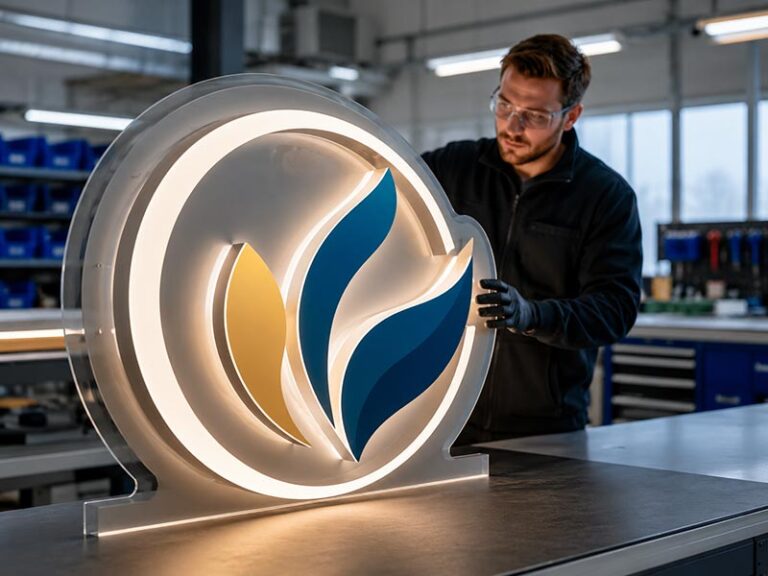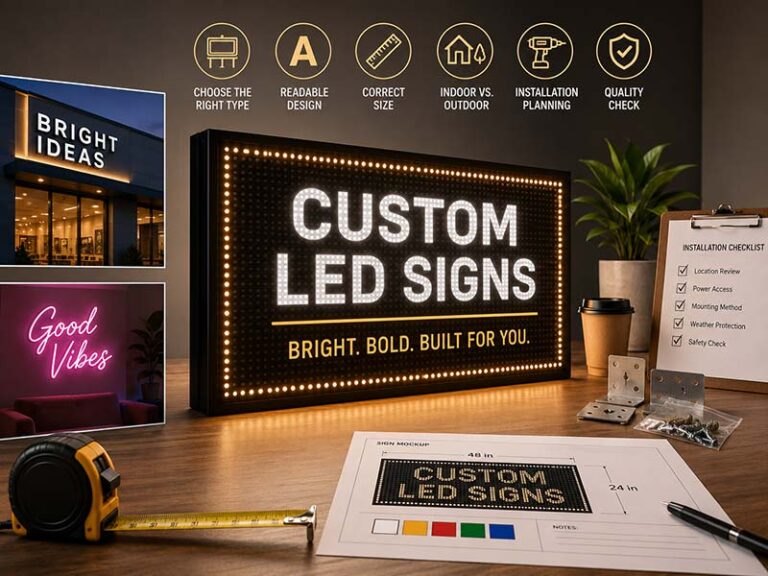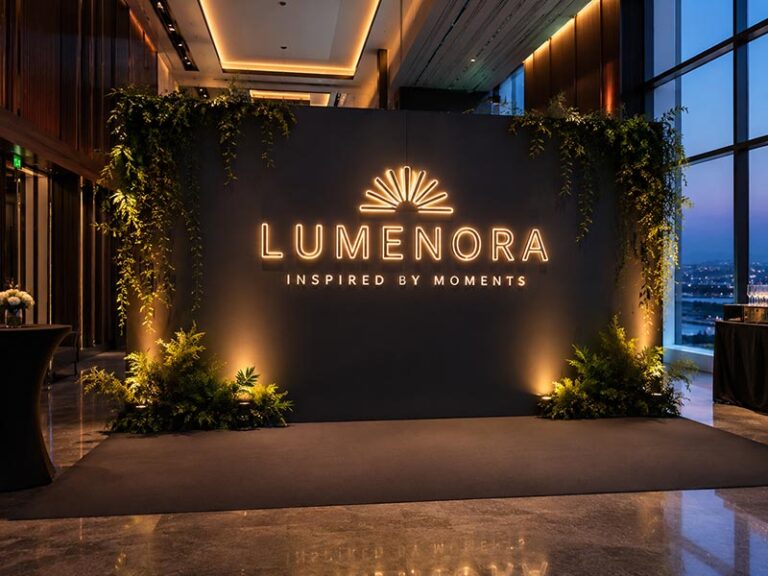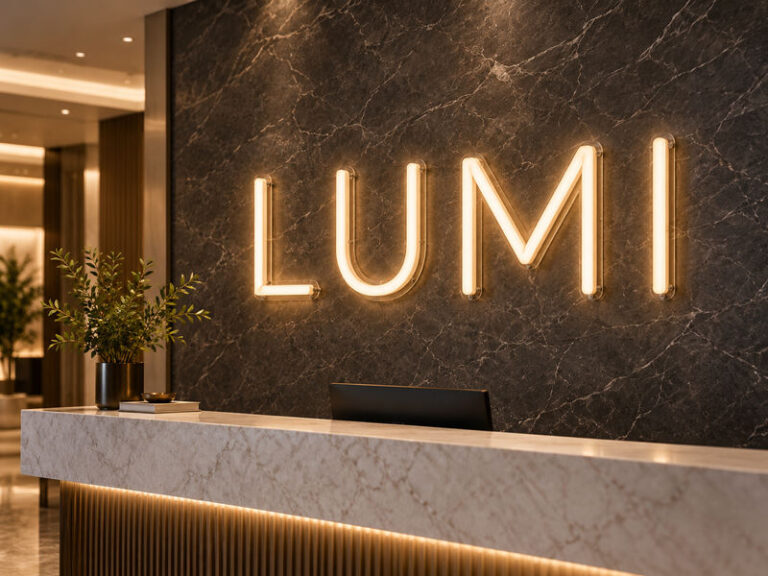

The illuminated line is usually the first thing people notice on an LED neon sign, but the acrylic behind it often determines whether the finished installation feels polished or unfinished. A backboard affects much more than structural support. It changes how the sign looks when it is switched off, how strongly ceiling lights reflect from the surface, how visible the wall remains behind the design, how wires and mounting hardware are managed, and how easy the sign is to align during installation. Frosted acrylic becomes especially useful when completely clear acrylic feels too glossy or produces distracting reflections in bright interiors. Its matte surface can soften the relationship between the neon, the wall, and the surrounding lighting without hiding the design behind a heavy opaque panel. The material works particularly well in reception areas, restaurants, studios, salons, boutiques, hotels, clinics, showrooms, and other commercial interiors where people often view the sign from short distances and expect the materials to look considered even when the LEDs are not illuminated.
Frosted acrylic backboards are a strong choice for LED neon signs when a project needs reduced surface glare, softer reflections, partial background visibility, and a more deliberate matte appearance. They work best when the acrylic finish, thickness, cut style, mounting points, wiring, wall material, viewing distance, and lighting conditions are evaluated together rather than selecting the backboard only by appearance.
The important decision is therefore not simply whether frosted acrylic looks attractive in a sample photograph. A 600 mm indoor logo, a 1,500 mm reception sign, a suspended event sign, and a large exterior installation place very different demands on the same material. The strongest result comes from treating the backboard as part of the complete LED neon system. Once material, light, wall conditions, installation, shipping, and future repeat orders are considered together, choosing between frosted, clear, opal, colored, or printed acrylic becomes much more practical and far less subjective.
What Is a Frosted Acrylic Backboard?

A frosted acrylic backboard is a rigid acrylic support panel with a matte or diffused surface positioned behind LED neon flex. It maintains the shape of letters and graphics, provides mounting and wiring points, and becomes part of the finished sign. Compared with polished clear acrylic, frosted acrylic reduces sharp reflections while maintaining a lighter visual appearance than most opaque backboards.
Backboard Function
LED neon flex is designed to bend into letters, curves, symbols, and logo outlines, but the flexible light source cannot reliably maintain a complex shape by itself. The acrylic backboard creates the physical framework that keeps every illuminated line in the correct position. It also provides stable locations for clips, fixing holes, stand-offs, hanging points, connectors, cable routes, and other hardware that would otherwise have to be attached directly to the wall or integrated into a more complicated structure.
This structural role becomes increasingly important as sign dimensions increase. A small tabletop design may need only a compact acrylic shape and a simple base, while a 1,200 mm or 1,800 mm commercial logo has to remain aligned during production, testing, packing, international transportation, unpacking, and final installation. The backboard therefore influences not only appearance but also handling, dimensional stability, installation time, and the likelihood that the installed logo matches the approved drawing.
The amount of acrylic left around the neon also changes the character of the product. A full rectangle creates one clearly defined object and provides plenty of area for mounting. A contour-cut backboard follows the outer shape of the design and reduces unnecessary visible acrylic. A closely cut or multi-piece backboard can produce a stronger floating effect, but it generally requires more careful alignment and more detailed wire planning. These choices should be confirmed during design development rather than left until the cutting stage.
At iduoduo, LED neon signs are treated as complete manufactured systems that combine line-path engineering, Neon Flex, acrylic backing design, power matching, wire-exit planning, mounting preparation, lighting inspection, testing, packaging, and repeat-production records. This approach is particularly relevant to commercial projects because the appearance of the illuminated line is only one part of the final installation.
Frosted Surface
A frosted finish scatters incident light across the acrylic surface instead of returning a sharp, mirror-like reflection. Depending on the sheet and manufacturing method, the finish may appear as a subtle satin haze or a more visibly translucent surface. That variation is important because two materials both described as “frosted acrylic” can look noticeably different once placed against a wall or illuminated by nearby lighting.
A material sample is therefore more useful than approving a backboard only from a digital rendering. Project teams should compare transparency, surface texture, visible haze, fingerprint behavior, edge appearance, and the amount of wall detail that remains visible through the sheet. For installations positioned near ceiling spotlights, large windows, mirrors, or polished stone, viewing the material from several angles is particularly valuable because reflections change as the observer moves through the space.
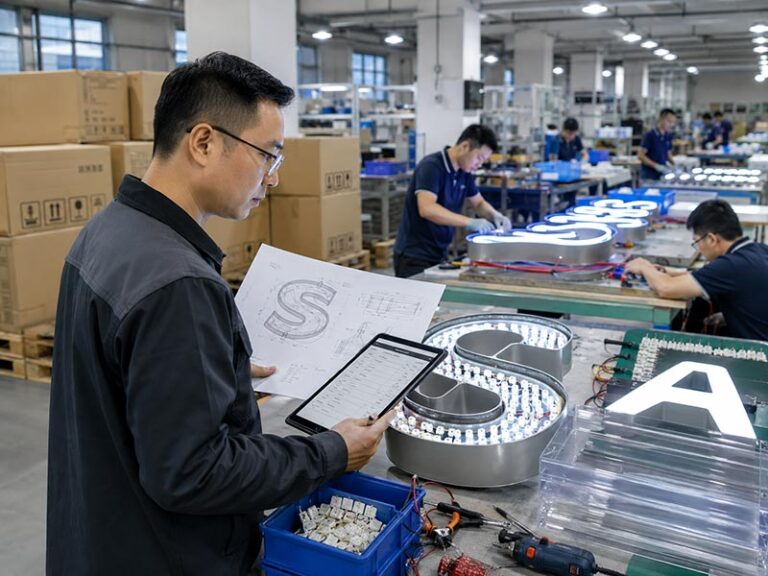
Acrylic manufacturing for signage can include cutting, engraving, routing, drilling, heat bending, bonding, polishing, frosting, printing, and edge finishing. The material also needs to be checked for thickness, color, transmission, diffusion, scratches, cracks, edge damage, and flatness. iduoduo’s documented acrylic processing scope includes these operations and specifically identifies diffusion, edge quality, thermal expansion, and outdoor yellowing risk as points that require attention.
The daytime appearance deserves the same attention as the illuminated appearance. Commercial signs may remain switched off for many hours, particularly in offices, clinics, studios, hotels, and retail environments. A backboard that appears elegant when glowing at night can still feel visually heavy during the day if the material is too opaque, oversized, poorly cut, or positioned against an unsuitable wall finish.
Frosted, Clear, and Opal Acrylic
Frosted acrylic should not automatically be treated as another name for opal acrylic. Frosted sheet usually remains at least partly transparent and gains its soft appearance from a matte or textured surface. Opal acrylic is generally a translucent white or milky material that blocks more background detail and is often selected specifically for light diffusion through the material rather than simply reducing surface reflections.
Clear acrylic sits at the opposite end of the visual spectrum. It allows the wall to remain highly visible and is often selected when the supporting panel should visually disappear. Frosted acrylic occupies useful middle ground because it keeps the structure relatively light while giving the sign a more deliberate surface and reducing sharp glare.
| Acrylic Type | Typical Appearance | Background Visibility | Reflection Level | Typical LED Neon Role |
| Clear | Transparent, polished | High | Higher | Floating, minimal support |
| Frosted | Matte, translucent | Partial | Lower | Soft commercial finish |
| Opal | Milky white | Low | Low | More visible backing field |
| Colored | Tinted or opaque | Low to moderate | Varies | Brand contrast |
| Printed | Graphic surface | Controlled | Varies | Branded or decorative backing |
The most suitable material depends on the wall, lighting, viewing distance, logo structure, and intended visual hierarchy. A transparent board may be ideal when the feature wall itself is important, while frosted acrylic may be more effective when reflections need to be controlled and the background should be softened without being completely covered.
How Does Frosted Acrylic Affect Neon Light?

Frosted acrylic mainly changes reflected and ambient light around an LED neon sign rather than reducing the electrical output of the Neon Flex itself. The matte surface scatters sharp reflections, lowers visible glare, and softens the relationship between the glowing line and the wall. Perceived brightness still depends on LED output, wall color, ambient lighting, viewing distance, mounting gap, and backboard transparency.
Glare and Reflections
A polished clear backboard can behave almost like a weak mirror when positioned under strong ceiling lighting or opposite a large window. From one angle it may appear almost invisible, while from another angle the viewer may see a bright row of reflected spotlights across the acrylic. In a dark entertainment environment this may not matter, but in a bright office, clinic, showroom, salon, reception, or premium retail space, those reflections can distract from the logo.
Frosted acrylic breaks up those sharp reflections by spreading the reflected light over a wider surface. The acrylic itself becomes slightly more visible, but the appearance is often more stable as people move around the room. This can be particularly valuable where the sign sits close to mirrors, glass shelves, polished stone, glossy cabinetry, stainless steel, or large areas of glazing that already produce strong reflected highlights.
The finish cannot eliminate every glare problem, however. A sign positioned directly opposite intense sunlight may still receive a strong reflected glow, and an excessively bright neon line can still feel uncomfortable at short viewing distances. Backboard finish should therefore be considered together with lighting direction, wall color, sign brightness, room usage, and whether dimming is required.
A practical approval process should include the sign switched off and illuminated under normal room lighting, followed by a second check under the brightest expected ambient lighting. Viewing the panel from the front, from approximately 30–45 degree side angles, and from the normal customer approach direction often reveals issues that are invisible in a straight-on studio photograph.
Brightness and Halo
Frosting does not normally reduce the electrical output produced by the LED neon flex because the illuminated tubing sits in front of the acrylic. What changes is perceived contrast. The frosted surface catches more surrounding light and can soften the visual transition between the bright neon line and the darker background. This can make the installation feel calmer even when the underlying LED specification remains unchanged.
Wall reflectance has a significant effect on the result. Pale walls return more of the neon glow into the surrounding area, which can produce a broader perceived halo. Dark walls absorb more light, making the neon path appear sharper and more separated from the background. Timber, stone, textured plaster, acoustic panels, and vegetation walls can create additional shadows and localized reflection patterns that change as the mounting distance varies.
The distance between the acrylic and the wall also affects the visual impression. A backboard positioned close to the wall produces a tighter relationship between the illuminated line and background, while stand-offs can create extra separation and allow reflected light to spread behind the sign. This does not mean that a larger gap is automatically better. Too much separation can make wires more visible from the side and may increase the visual prominence of stand-offs or wall anchors.
For commercial environments, brightness should therefore be evaluated as a combination of neon output, color temperature, wall reflectance, viewing distance, room lighting, acrylic finish, and mounting geometry. The goal is usually not maximum brightness. Comfortable contrast, readable branding, accurate color, good photography, and a stable appearance throughout the day are often more useful objectives.
Wall and Ambient Light
The same frosted sign can look dramatically different when moved from one surface to another. Against a white wall under cool 4000–5000 K ceiling lighting, the acrylic may appear lighter and more noticeable. Against a charcoal or dark green wall, the backing may visually recede while the illuminated line becomes more dominant. Warm interiors can also change how white or pastel neon colors are perceived, particularly in spaces using warm decorative lighting.
Close-range viewing makes these details more important. A reception logo installed behind a counter may be seen from only 1–2 m away, allowing visitors to notice edge finishing, mounting hardware, cable exits, scratches, dust, and uneven surface treatment. A sign viewed from 5–8 m across a retail floor places more emphasis on overall shape, brightness, contrast, and logo recognition than on minor edge details.
iduoduo’s internal optical guidelines reflect this project-based approach by linking LED configuration with logo geometry, diffuser material, viewing distance, ambient light, wall reflectance, color temperature, brightness, hot spots, dark areas, and halo quality. Illuminated products are also checked for day-and-night performance rather than being judged only in a dark testing environment.
Providing wall photographs, room lighting information, and an approximate viewing distance before production can therefore prevent material decisions from being made in isolation. The strongest backboard choice is one that works with the actual space rather than simply looking attractive against a neutral workshop wall.
Which Is Better: Frosted or Clear Acrylic?

Clear acrylic is usually stronger when the design needs the backing to disappear and preserve a floating neon effect. Frosted acrylic is often stronger when sharp reflections, glare, cable shadows, or a highly glossy surface would interfere with the surrounding interior. Neither material is universally better. The correct choice depends on wall finish, ambient lighting, viewing distance, installation style, and brand aesthetics.
Floating Effect
Clear acrylic remains the most natural starting point when a design needs minimal visible backing. A contour-cut clear panel allows the wall color and texture to remain visible around the illuminated tubing, making the neon appear more independent from its support. This is particularly effective against brick, decorative plaster, timber, concrete, or feature walls where the background material forms an important part of the interior concept.
Frosted acrylic creates a more deliberate object. The panel remains partially visible and may soften the wall behind it, so the installation reads more clearly as a finished sign rather than only a glowing line. In minimalist offices, salons, studios, clinics, boutiques, restaurants, and hotel environments, that slight visual presence can work well with matte paint, stone, brushed metal, or other restrained materials.
Cut style can be as important as finish. A large rectangular clear board may still be obvious because its outer edge and reflections are easy to see. A tightly contour-cut frosted board may appear much lighter because very little material extends beyond the neon. Finish and geometry should therefore be considered separately rather than assuming that all clear signs look invisible and all frosted signs look heavy.
The clearest selection question is whether the backboard should disappear into the wall or participate in the visual design. If the support should almost disappear, clear acrylic generally has an advantage. If a soft, controlled, matte background is part of the intended appearance, frosted acrylic becomes a stronger candidate.
Bright Interiors
Bright commercial interiors create challenging conditions for glossy surfaces. LED downlights, track lights, daylight, mirrors, display glass, polished counters, metal fixtures, and illuminated shelving can all create reflections on a clear backboard. These reflections often change as people move, making a sign that looks excellent in one photograph appear much more reflective from another position.
Frosted acrylic usually provides a more consistent surface because reflected highlights are spread rather than sharply mirrored. The trade-off is reduced transparency. Designers therefore need to decide whether low glare or maximum visibility of the wall behind the sign matters more to the project.
| Project Requirement | Clear Acrylic | Frosted Acrylic |
| Strong floating appearance | Excellent | Good |
| Minimum visible backing | Excellent | Moderate |
| Reduced sharp glare | Moderate | Excellent |
| Bright interior lighting | Good | Excellent |
| Decorative wall visibility | Excellent | Partial |
| Soft matte appearance | Good | Excellent |
| Reduced cable shadow visibility | Limited | Better |
| Close-range commercial viewing | Good with careful finishing | Very good with careful finishing |
The table is a practical starting point rather than a fixed rule. High-quality clear acrylic with well-planned lighting can still perform extremely well in a bright interior, while frosted acrylic can become too visually dominant if the panel is oversized or the haze level is too strong. Testing the actual material against a photograph or sample of the intended wall provides a more reliable decision.
Wiring and Hardware
Frosting can reduce the visibility of objects behind the acrylic, but it should never become a substitute for proper wire planning. A cable routed diagonally behind a translucent panel can still be noticeable, particularly when the wall is light and the wire is dark. Rear exits, edge exits, cable channels, connectors, and power-supply locations should therefore be planned before the panel is cut.
The same principle applies to mounting hardware. Stand-offs may intentionally remain visible on a rectangular architectural panel, while contour-cut signs often benefit from fixing points positioned inside wider, less visually sensitive areas. Holes placed too close to narrow acrylic bridges or corners can create unnecessary stress, especially during transportation and tightening at the installation site.
Commercial projects should establish the wall material, expected mounting method, cable entry location, power-supply position, number of fixing points, visibility of hardware, access for future servicing, and whether a drilling template is needed. These details can affect the backboard design more than the choice between clear and frosted material itself.
A sign can be visually accurate and still create installation problems if the cable exits through the wrong part of the logo or the hole pattern does not match the wall condition. Treating mounting and wiring as part of the product design helps prevent a finished sign from arriving on site with details that require improvisation.
Which Thickness and Cut Style Should You Choose?

Backboard thickness and shape should be selected according to sign dimensions, unsupported spans, fixing locations, weight, shipping conditions, and installation method. Approximately 3–5 mm acrylic is a common starting range for many indoor LED neon signs, while larger, suspended, or structurally demanding designs may require thicker material. Final thickness should always be reviewed against the actual geometry rather than copied from a standard specification.
Acrylic Thickness
Thickness affects rigidity, weight, drilling strength, material cost, packing size, and installation effort. A small indoor sign does not automatically improve when thicker acrylic is used, while a wide logo may flex excessively if the same thin sheet is applied across a long unsupported span. The relationship between thickness, shape, and fixing points is therefore more useful than thickness alone.
Common market practice often starts around 3 mm for smaller lightweight signs and around 4–5 mm for many standard commercial indoor neon projects. Larger panels, suspended signs, or designs with long unsupported sections may move toward approximately 6–8 mm, but these figures should be treated as starting references rather than engineering guarantees.
| Acrylic Thickness | Typical Starting Application | Main Consideration |
| Around 3 mm | Smaller indoor signs | Lightweight but more flexible |
| Around 4–5 mm | Many standard commercial neon signs | Useful balance of rigidity and weight |
| Around 6–8 mm | Larger or more demanding installations | Higher rigidity with additional weight |
| Project-specific | Oversized, unusual, or segmented structures | Engineering and transport review |
Geometry can change the behavior of a sheet dramatically. A 5 mm rectangle with continuous material around the perimeter behaves differently from a 5 mm contour containing narrow bridges, deep internal cut-outs, or long unsupported sections. Mounting holes placed far apart can also allow visible movement even when the acrylic itself is relatively thick.
Increasing thickness is not always the most efficient solution. Added thickness increases product weight and can raise shipping cost or installation load. Better fixing locations, a more stable contour, planned segmentation, or a different mounting approach may solve the same problem more effectively.
Cut Style
A rectangular backboard retains the most acrylic and usually offers the simplest mounting structure. Fixing holes can be placed near strong perimeter areas, and the product remains easy to align as a single panel. Rectangles work particularly well for hanging signs, windows, event installations, portable displays, and designs where a deliberate panel forms part of the visual concept.
Contour cutting removes unnecessary material while keeping the main logo or text connected. This reduces the visible acrylic area without creating too many separate installation pieces. For many custom commercial LED neon signs, contour cutting offers a useful balance between appearance, rigidity, installation time, and wire management.
Cut-to-letter or closely shaped backing removes even more acrylic and can create a stronger floating appearance. The trade-off is additional complexity. Multiple pieces may require separate fixing points, alignment templates, more detailed wiring, and extra installation time. Very narrow acrylic areas may also become more vulnerable to stress during packing, handling, or installation.
The correct choice should take total project effort into account. A sign company installing a design across 20 or 30 locations may prefer a slightly larger contour backboard if it makes every installation faster and more repeatable. A one-off flagship interior may justify a more complex multi-piece layout because minimizing visible acrylic is more important than installation speed.
Large Signs
As signs become wider, manufacturing is only one part of the size problem. A one-piece acrylic panel may fit a cutting machine but still be difficult to package, carry through a building, lift safely, or position accurately on a wall. Large panels are also more vulnerable to flexing during transport and handling.
Planned segmentation is often more practical for oversized neon designs. Panel joints can follow natural gaps between words, logo elements, or graphic features, allowing the finished installation to look continuous while keeping each section manageable. This works best when segmentation is designed from the beginning rather than introduced after a transportation problem appears.
Large-project drawings should show the dimensions of each panel, acrylic thickness, joint positions, mounting holes, alignment references, electrical connections between sections, power-supply arrangement, packed dimensions, and intended installation sequence. If a drilling or positioning template is required, that should also be designed before production.
iduoduo’s documented engineering process includes material thickness, mounting holes, wire exits, backboard design, large-product segmentation, packaging load, transport dimensions, and installation method among the points considered during project evaluation. This type of review becomes increasingly important as overall sign dimensions and installation complexity grow.
Are Frosted Backboards Suitable Indoors and Outdoors?

Frosted acrylic is particularly suitable for indoor LED neon signs where close-range appearance, reduced glare, concealed wiring, and surface quality are important. Outdoor use is also possible when the complete sign is engineered for the environment. Frosting alone does not make a sign weather-resistant; acrylic grade, UV exposure, temperature movement, Neon Flex, connectors, power supplies, sealing, drainage, mounting, and maintenance must all be considered.
Indoor Use
Indoor installations usually allow more attention to material finish because heavy rain, wind loading, and direct weather exposure are absent. Reception areas, boutiques, cafés, restaurants, beauty spaces, studios, hotels, clinics, gyms, offices, and showrooms are common environments where frosted acrylic can provide a softer appearance than polished clear backing.
Close viewing distances make manufacturing quality more visible. A reception sign may be seen from only one or two meters away, allowing visitors to notice scratches, polished or unfinished edges, cable shadows, mounting hardware, dust, adhesive marks, and inconsistencies in the frosted surface. Surface quality and edge treatment therefore matter more than they may on a large sign positioned several meters above eye level.
Commercial interiors can also contain many reflective materials. Beauty salons often use mirrors, restaurants may combine glass and metal, boutiques rely on display lighting, and hotel or office receptions frequently use stone, polished surfaces, and spotlights. Frosted acrylic can help prevent the backboard from becoming another highly reflective element within an already complex lighting environment.
The choice should still respect the wall. A highly textured brick or timber feature may be an important part of the visual design, in which case clear acrylic can preserve more of the background. Frosted acrylic works best when softening the wall is desirable rather than when the wall needs to remain completely visible.
Outdoor Use
An outdoor frosted acrylic backboard should be treated as one part of a broader weather-exposed assembly. Acrylic can be suitable for many exterior sign applications, but the finished LED neon product also includes flexible lighting, wires, connectors, controllers, power supplies, mounting hardware, and wall penetrations that require their own environmental protection.
Rain is only one concern. UV exposure, heat, cold, thermal cycling, wind, dust, humidity, water paths around cable exits, and long-term movement can all influence performance. Coastal locations add salt and corrosion concerns, particularly around metal hardware, connectors, and electrical components.
The actual exposure level needs to be described accurately. A sign installed beneath a deep canopy at a shopping center does not experience the same conditions as a sign fixed to an uncovered exterior wall. Similarly, a sheltered restaurant terrace is different from a seafront façade exposed to wind-driven rain and salt air.
iduoduo’s project documentation separates indoor requirements such as material texture, soft light, close-range appearance, and low glare from outdoor considerations that include rain, UV exposure, temperature changes, wind, drainage, corrosion, sealing, and electrical protection. That distinction helps prevent an indoor neon specification from being carried directly into an exterior project without modification.
UV and Temperature
Acrylic is widely used in signage because it combines relatively low weight with good optical appearance and machinability, but larger panels still expand and contract as temperature changes. Fixing methods should allow appropriate movement instead of tightly clamping every hole, especially on larger outdoor sheets where temperature variation can produce greater dimensional change.
Stress concentration around drilled holes, sharp internal corners, or narrow bridges also deserves attention. Acrylic can crack if a fixing point is overtightened or positioned too close to a fragile edge. Larger contour-cut shapes may require additional mounting points or slightly different geometry to prevent repeated movement from concentrating stress in one area.
Outdoor exposure also raises questions around long-term surface appearance. Material grade, UV exposure, sheet quality, color, finish, and environmental conditions can influence yellowing, distortion, cracking, or surface change over time. These risks should be evaluated before selecting a finish rather than assuming that every acrylic sheet sold for signage performs identically outdoors.
A practical outdoor project review should therefore consider direct sunlight, expected temperature range, direct rain exposure, wind, coastal conditions, wall material, mounting-hole allowance, hardware material, cable-entry protection, drainage, power-supply protection, and access for maintenance. Matching all of these conditions to one coherent structure provides a much stronger specification than simply requesting “outdoor frosted acrylic.”
How Do You Specify a Frosted Acrylic Backboard?

A complete frosted acrylic backboard specification should define artwork, overall dimensions, acrylic finish, thickness, backboard shape, Neon Flex color, mounting method, fixing holes, wire exits, power configuration, indoor or outdoor use, quantity, destination, packaging, and project deadline. For repeat orders, approved drawings, material records, electrical details, hole positions, and QC references should also be preserved to improve consistency between production batches.
Files and Dimensions
Vector artwork provides the most useful starting point because it allows the manufacturer to evaluate the actual line geometry of the logo. AI, SVG, EPS, PDF, and suitable CAD files can normally provide more reliable manufacturing information than a low-resolution JPG. A raster image can still be useful for early discussion, but complex designs often need to be rebuilt into clean production paths before cutting and neon shaping begin.
Overall width alone is rarely enough to define a commercial LED neon sign. The project team should also provide target height, quantity, indoor or outdoor environment, wall material, viewing distance, preferred backboard style, neon color or color temperature, mounting method, electrical requirements, destination, and required project date. Two signs with the same 1,200 mm width may need very different structures if one is mounted indoors on drywall and the other is suspended near an exterior entrance.
Complex logos may also require minor engineering adjustments. Extremely small lettering, narrow negative spaces, tight bends, or overlapping lines may not suit the physical bend radius and connection requirements of the selected Neon Flex. Enlarging the overall sign, adjusting spacing, or simplifying a small detail can sometimes produce a cleaner and more reliable illuminated result while preserving the recognizable character of the original artwork.
iduoduo can work from logos, AI, PDF, SVG and CAD files, reference images, wall dimensions, store photographs, brand materials, and installation information, then convert those inputs into production-ready drawings and structures. Providing complete project information at the start reduces assumptions and makes quotations, sampling, and engineering confirmation more accurate.
Mounting and Wire Exits
Mounting holes should be positioned according to the actual shape and load of the backboard rather than added evenly for appearance. Holes need sufficient material around them, should avoid fragile internal corners, and should distribute the sign weight in a way that limits flex or movement. Large or irregular panels often need more fixing points than compact rectangular signs.
Wire exits need the same level of planning. A cable leaving the lower edge may be perfectly acceptable for a temporary event display but visually distracting on a premium reception wall. Rear exits can create a cleaner appearance, but they require the power location and wall penetration to match the production drawing accurately.
Before approval, the drawing should clearly identify overall backboard dimensions, panel outline, acrylic thickness, fixing-hole positions, stand-offs or mounting accessories, wire-exit location, cable direction, panel divisions, neon path, electrical connections, and installation orientation. A mounting template may also be useful for projects that involve several separate pieces or repeated installations across multiple locations.
Professional installation becomes easier when these details are defined before the sign leaves the factory. A visually accurate product can still create significant site problems if the cable exits in the wrong location, fixing holes are difficult to access, or several individual pieces lack reliable alignment references.
QC and Repeat Orders
Material inspection should begin before final assembly. The acrylic needs to match the approved type, thickness, finish, dimensions, contour, and color. Edges, holes, internal corners, and visible surfaces should be checked for chips, scratches, cracks, pressure marks, or uneven frosting before the LED neon is fully installed.
Once assembled, inspection should extend to the neon path, line spacing, bend quality, color, connectors, wire routing, power supply, mounting hardware, and overall visual alignment. Illuminated inspection is essential because dark areas, color differences, flicker, wiring problems, and some power issues may not appear during an unpowered visual check.
iduoduo’s documented process uses 100% lighting inspection followed by a 72-hour pre-shipment test for illuminated products. The test is intended to observe LED stability, power stability, controller operation, flicker, early failures, color difference, local dark areas, abnormal temperature, and wiring connections before shipment.
Repeat orders require equally careful document control. A project may begin with one sample but later expand into multiple retail locations, franchise sites, events, or regional installations. Keeping the approved drawing, acrylic finish, thickness, Neon Flex specification, power configuration, fixing positions, cable exits, packaging method, and QC references helps reduce variation between batches and avoids rebuilding the specification from memory each time.
iduoduo’s manufacturing system includes design, engineering, acrylic processing, production, QC, packaging, logistics coordination, and after-sales support rather than treating these steps as separate one-off activities. The company operates multiple production bases and production lines and maintains dedicated design, engineering, and QC functions, supporting both sample development and repeat commercial projects.
A useful specification is therefore one that can survive beyond the first sample. The final file should make it possible for a new production batch, installer, project manager, or quality inspector to understand exactly what was approved without relying on verbal explanations or photographs from an earlier order.
Frosted acrylic can make an LED neon sign feel softer, more controlled, and more integrated with a commercial interior, but those benefits appear only when the material is selected for the real installation conditions. Clear acrylic may still be stronger when maximum wall visibility and a floating appearance matter most, while a full frosted panel may work better where glare control, wiring concealment, and a deliberate matte surface are more important.
The best project decisions come from connecting finish, thickness, cut style, lighting, wall color, mounting, wiring, transport, testing, and future repeat production. When these factors are resolved before manufacturing begins, the backboard stops being a secondary piece of plastic and becomes what it actually is: an important part of the sign’s structure, appearance, installation system, and long-term consistency.
Frequently Asked Questions
Is frosted acrylic better than clear acrylic for LED neon signs?
Frosted acrylic is not automatically better than clear acrylic. It is generally more suitable when the installation needs reduced sharp reflections, softer surface appearance, less visible cable shadowing, or a more intentional matte background. Clear acrylic is usually stronger when the wall should remain highly visible and the design needs a floating appearance. The correct material depends on lighting, wall finish, viewing distance, cut style, and the intended visual character of the space.
Does frosted acrylic make an LED neon sign less bright?
The frosted backboard does not normally reduce the electrical output of Neon Flex mounted on its front surface. It can, however, change perceived brightness because the matte acrylic scatters surrounding and reflected light differently from polished clear sheet. Wall color, ambient lighting, distance from the wall, neon color, and viewing angle also affect how bright the installation appears. A powered sample or realistic test provides a more reliable judgment than comparing material samples alone.
What thickness of frosted acrylic is used for LED neon signs?
Around 3–5 mm is a common starting range for many indoor LED neon backboards, while larger, suspended, or more demanding designs may use approximately 6–8 mm or another project-specific thickness. These figures should not be treated as universal rules. Overall dimensions, cut geometry, internal openings, mounting-hole spacing, weight, installation method, and shipping conditions can all change the rigidity required from the backboard.
Can frosted acrylic backboards be used outdoors?
Yes, frosted acrylic can be used as part of an outdoor LED neon sign when the material and complete assembly are selected for the actual environment. Outdoor suitability depends on more than the acrylic finish. UV exposure, rain, temperature change, wind, Neon Flex, connectors, power supplies, cable entries, mounting hardware, sealing, drainage, corrosion resistance, and installation workmanship all need to be considered before the final specification is approved.
Should I choose a rectangular or contour-cut frosted backboard?
A rectangular backboard generally provides the simplest mounting, good rigidity, and generous space for holes and wiring. A contour-cut backboard removes unnecessary acrylic around the design and usually creates a lighter, more integrated appearance. Closely cut or multi-piece layouts can reduce visible backing further but increase alignment and installation complexity. The best choice depends on the logo geometry, required visual effect, installation time, panel size, shipping method, and future repeat-order requirements.
What information should I provide before ordering a frosted acrylic LED neon sign?
Provide the clearest artwork available, preferably a vector file, together with overall dimensions, quantity, installation environment, wall or mounting surface, preferred neon color, desired backboard style, mounting method, cable-exit preference, voltage, destination, and required delivery date. For larger commercial projects, wall photographs, installation drawings, access restrictions, and lighting information can also help the manufacturer select a more suitable thickness, fixing pattern, segmentation method, and electrical configuration.