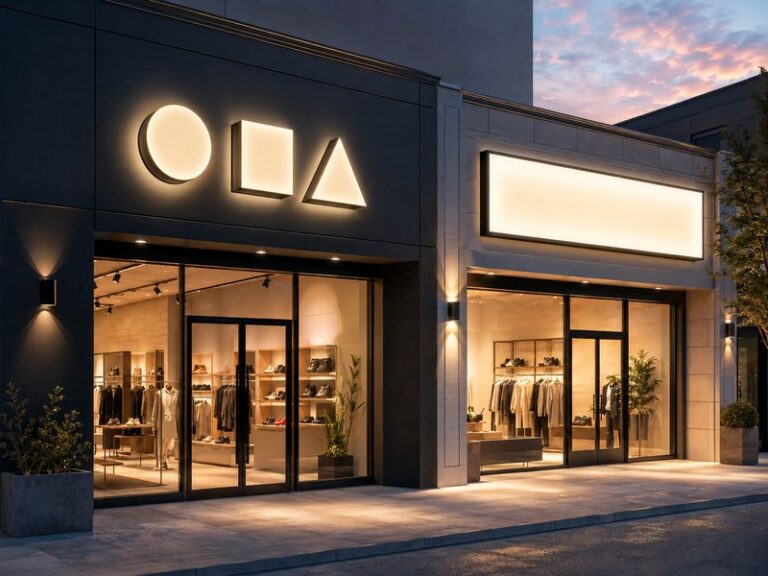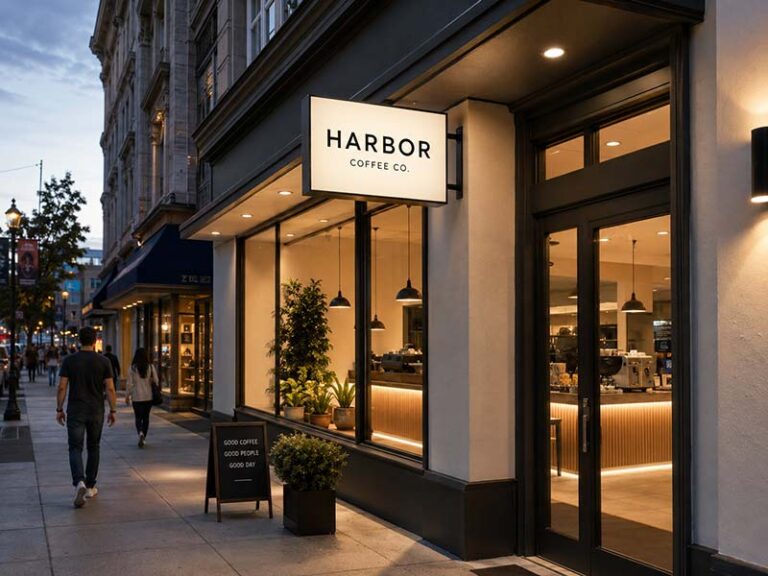

Light boxes often look simple when viewed from the front, but the choice between acrylic and fabric can change almost everything behind that illuminated surface. Face weight, graphic size, colour performance, LED spacing, cabinet depth, shipping method, installation labour, future graphic replacement, and outdoor durability can all be affected by that one decision. A rigid acrylic face can look clean and permanent on a storefront or reception wall, while a tensioned fabric graphic can turn a large retail wall into a reusable illuminated advertising platform that changes with every campaign.
For most permanent logos, text-based signs, and compact storefront applications, acrylic is usually the more natural choice because it provides a rigid and clearly defined illuminated face. Fabric light boxes are generally better for large-format graphics, photographic imagery, and applications where artwork changes regularly. Neither material is universally superior; the correct choice depends on size, graphic type, viewing distance, environment, installation method, service access, and the expected frequency of future graphic changes.
Consider two projects that both require an illuminated sign measuring several metres across. One belongs to a restaurant that expects its logo to remain unchanged for many years. The other belongs to a fashion retailer that replaces campaign imagery every eight weeks. The outside dimensions may be similar, yet the best construction can be completely different. Understanding that difference before requesting quotations usually saves more time and money than trying to optimise the face material after engineering has already started.
What Are Acrylic and Fabric Light Boxes?

An acrylic light box uses a rigid acrylic panel as the illuminated face, while a fabric light box uses a tensioned textile or flexible graphic secured into an aluminium frame. Acrylic is especially suitable for permanent logos, lettering, and defined commercial displays. Fabric is particularly useful for large graphics, replaceable campaigns, and installations where a continuous illuminated image is more important than a rigid surface.
Acrylic Light Box Construction
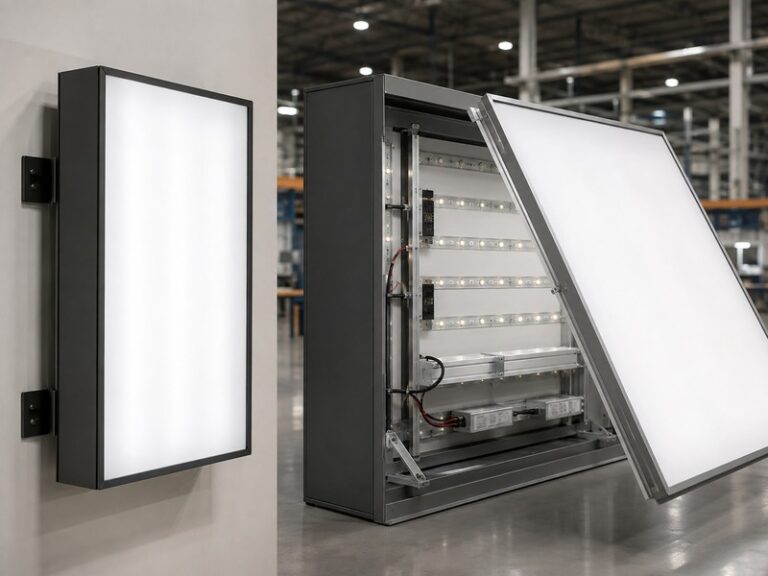
An acrylic light box normally combines a metal or aluminium cabinet, internal LED lighting, electrical components, mounting hardware, and a rigid illuminated face. The front panel may be made from opal acrylic, coloured acrylic, transparent acrylic combined with printed graphics, UV-printed acrylic, acrylic with translucent vinyl, or layered acrylic constructions. iduoduo’s documented light-box range includes both acrylic-face and fabric systems, together with other single-sided, double-sided, menu, outdoor, wall-mounted, hanging, and freestanding configurations.
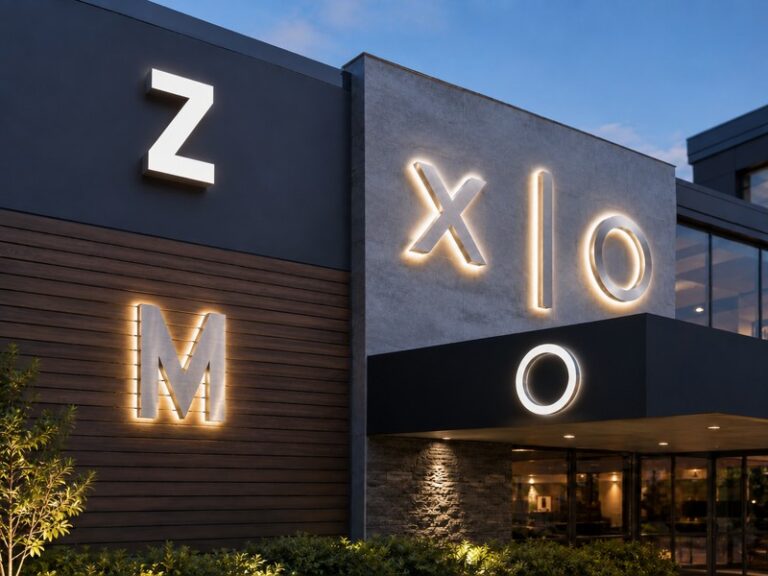
The rigid nature of acrylic gives it a particular visual character. Logo edges, printed graphics, cut shapes, translucent vinyl, and lettering remain physically defined because the face does not rely on tension to hold its form. This makes acrylic especially suitable when the light box itself needs to feel like a permanent architectural object rather than a temporary advertising frame. Storefront identities, reception logos, simple brand graphics, directional information, and menu systems are common examples where that solid appearance can be valuable.
Acrylic also introduces engineering considerations that become increasingly important as the panel grows. A rigid face needs secure retention, suitable clearance for material movement, adequate support, surface protection, and a practical method for removal if LEDs or internal electrical components need service. Acrylic can expand and contract as temperatures change, so clamping a large panel too tightly around every edge may create unnecessary stress. Large panels also need more careful packaging because surface scratches, edge damage, and flexing during transport can remain visible after installation.
The material thickness alone does not determine whether the finished light box will look professional. An acrylic face has to work together with cabinet depth, LED beam angle, LED spacing, internal reflectance, graphic density, and viewing distance. A premium acrylic sheet placed on a poorly designed shallow cabinet can still show LED points and dark areas, while an appropriately specified face combined with a balanced optical system can produce smooth, even illumination.
Fabric Light Box Construction
A fabric light box normally uses an aluminium profile, internal LED illumination, power components, and a printed textile graphic held under controlled tension. Many commercial systems use a silicone edge sewn around the perimeter of the graphic. The edge fits into a narrow channel in the aluminium extrusion, pulling the face flat across the illuminated opening. This construction is commonly known as an SEG, or Silicone Edge Graphic, light box.
The key difference is that the graphic is treated as a replaceable part of the system rather than as a permanent structural face. The aluminium frame and lighting system can remain installed while the fabric is removed and replaced when artwork changes. That makes the format attractive for shopping centres, retail stores, exhibitions, airports, showrooms, product launches, seasonal promotions, fashion campaigns, and branded environments where visual content changes more frequently than the underlying lighting structure.
Fabric still requires careful engineering. iduoduo’s documented light-box requirements include fabric light transmission, printing behaviour, cabinet depth, LED spacing, graphic tension, edge dark areas, and the difference between daytime and illuminated colour. A graphic can look excellent on the printing table yet appear darker around the edges, slightly distorted, or noticeably different in colour once it is stretched over a frame and backlit.
Large-format use is one of fabric’s strongest advantages. The printed surface carries relatively little structural weight compared with a rigid sheet, and the graphic can usually be packed separately from the frame. This can simplify transportation and handling for large displays. However, a flexible face does not mean the complete product is lightweight. Long aluminium sections, internal reinforcement, LED backplates, power supplies, joining hardware, and double-sided construction can still create substantial installed weight.
How the Two Systems Differ
The most useful comparison is not simply plastic versus textile. The real difference lies in what the face is expected to do throughout the life of the product. Acrylic becomes part of the physical object and often supports a permanent visual identity. Fabric acts more like a replaceable visual layer mounted over a reusable illuminated structure. Both can look professional when matched to the correct application, but forcing one system into the role of the other usually creates avoidable compromises.
| Project Factor | Acrylic Light Box | Fabric Light Box |
| Face type | Rigid acrylic panel | Tensioned textile graphic |
| Best visual role | Logo, text, defined graphics | Photography, advertising, campaign graphics |
| Graphic replacement | Depends on face construction | Usually designed for frequent replacement |
| Large-format use | More handling as size increases | Particularly suitable for broad graphic areas |
| Surface appearance | Hard, defined, architectural | Smooth, continuous, near edge-to-edge |
| Packing priority | Scratch and impact protection | Frame length and fabric protection |
| Typical use cycle | Long-term identity | Reusable frame with changing graphics |
A permanent corporate logo that remains unchanged for several years does not necessarily benefit from a graphic system designed for weekly replacement. In the same way, a fashion retailer should not have to remove and repack a large rigid acrylic panel every time a seasonal campaign changes. The most efficient system is the one that fits the real operating pattern rather than the one that simply appears cheaper on the first quotation.
Which Light Box Gives Better Visual Performance?

Neither acrylic nor fabric automatically produces better illumination. Acrylic performs particularly well when a project needs defined logos, lettering, solid colour, and a rigid visual surface, while fabric is highly effective for photography and large continuous graphics. In both systems, LED spacing, cabinet depth, diffusion, artwork density, face transmission, colour temperature, and viewing distance have a major influence on final appearance.
Logo and Graphic Clarity
Acrylic often performs very well when the design depends on clean geometry and clearly defined edges. Simple logos, lettering, translucent films, solid blocks of brand colour, and smaller graphic elements can be presented on a mechanically stable surface that retains its shape. At close viewing distances, that rigidity can give a light box a more architectural character, which is valuable for reception spaces, permanent retail identities, restaurant branding, and storefront applications.
Fabric becomes particularly strong when the visual content contains photography, gradients, fine colour transitions, product imagery, or large continuous advertising compositions. A single printed textile can cover a broad illuminated area without the panel joints that may become necessary when a rigid face grows beyond manageable sheet dimensions. For fashion, cosmetics, automotive, exhibitions, and promotional displays, the graphic itself is often more important than the physical character of the front panel.
Viewing distance should be considered before judging either material. A 700 mm logo viewed from two metres exposes small edge defects, printing alignment, and surface imperfections that may be almost invisible on a 4,000 mm campaign wall viewed from across a shop. The larger display is more likely to be judged by image continuity, colour balance, overall brightness, and consistency across the face rather than the microscopic finish of one printed edge.
The best material therefore depends on the visual task. If the light box must behave like a permanent illuminated brand object, acrylic often fits naturally. If the project should behave like a large illuminated picture that changes with campaigns, fabric usually provides more flexibility. The strongest projects begin by defining what the viewer needs to notice rather than starting with a material name.
LED Uniformity and Hotspots
A professional light box should appear evenly illuminated without making individual LED modules visible through the front face. Bright points, dark strips, uneven corners, or noticeable brightness differences between the centre and perimeter usually indicate that several parts of the optical system are not working together properly. The cause may involve cabinet depth, face transparency, LED beam angle, module pitch, graphic density, internal reflection, or a combination of these factors.
Visible LED points become more likely when the light source sits too close to the front face, the diffuser is too transparent, or the space between LEDs is too wide for the selected depth and beam pattern. iduoduo’s engineering documentation identifies insufficient light-box depth as one possible cause of visible LED points and notes that the problem generally requires coordinated adjustment of structure, face material, diffusion, and LED arrangement rather than simply reducing brightness.
Using more LEDs is not automatically an improvement. Excessively dense modules can increase power consumption and heat while providing little additional visual benefit. Too few modules can create obvious dark zones between illuminated areas. The correct arrangement depends on the beam angle of the LEDs, the distance from the face, the transmission characteristics of the acrylic or fabric, and the colour density of the graphic printed over the illuminated surface.
For project approval, it is useful to inspect more than a single front-facing photograph. The centre, four corners, edges, and darker artwork areas should all be checked. Photography can also exaggerate or hide hotspots depending on exposure settings, so physical samples or video taken at realistic brightness levels are particularly useful for demanding brand applications. A sign that looks evenly illuminated in a dark factory may behave differently once installed in a brightly lit store.
Colour and Colour Temperature
A backlit graphic should not be approved only from a computer screen because digital colour and transmitted physical colour behave differently. A monitor creates colour with emitted RGB light, while a light box sends LED light through acrylic, ink, fabric, vinyl, or several layers of material. Once transmission, diffusion, and the colour of the light source are added, some shades can shift noticeably from the appearance of the original artwork file.
Commercial white-light projects often work within familiar colour-temperature families. Warm white is commonly around 3000 K, neutral white is frequently around 4000 K, and cooler white can fall around 5000-6500 K. These figures should be treated as useful project references rather than universal rules. The correct value depends on the brand identity, surrounding interior lighting, graphic colours, wall finishes, and the visual atmosphere expected from the installation.
Warm light can make cream, beige, gold, wood tones, and skin colours appear softer, while very cool light may make clean whites look brighter but can reduce warmth in those same colours. The opposite effect can occur when a cool corporate palette is illuminated with a strongly warm LED. For strict brand programmes, approving a printed sample under the intended LED colour temperature is far more reliable than making a decision from an emailed PDF.
Daytime and illuminated colour should also be evaluated separately. iduoduo’s material guidance distinguishes the unlit appearance of acrylic from its transmitted appearance after illumination and highlights the same day-versus-night issue for fabric graphics. A colour that appears accurate under office lighting may become too saturated, too warm, or too pale once illuminated from behind, especially on light-coloured backgrounds and highly translucent materials.
| Optical Variable | Practical Check | Common Risk |
| Cabinet depth | Test using actual construction depth | Visible LED points |
| LED spacing | Inspect centre, edges, and corners | Bright or dark bands |
| Face transmission | Compare lit and unlit appearance | Excessive brightness or dull image |
| Colour temperature | Approve under intended LEDs | Brand colour shift |
| Graphic density | Review light and dark image zones | Uneven perceived brightness |
| Edge illumination | Check all four sides | Dark perimeter |
Visual quality therefore comes from the entire optical system rather than one material specification. A well-engineered fabric light box can outperform a poorly engineered acrylic cabinet, and the reverse is equally true. Face material should be selected together with the LED layout, depth, artwork, and viewing conditions instead of being treated as a stand-alone upgrade.
Which Is Better for Size and Installation?

Fabric light boxes generally become more practical as graphic areas grow because flexible faces are easier to handle and can cover broad visual surfaces without depending on one large rigid sheet. Acrylic remains highly effective for many small and medium installations, but larger rigid panels require more attention to weight, material movement, support, packaging, joints, and safe installation.
Large-Format Projects
Size changes the entire engineering approach of a light box. A small wall-mounted unit may be assembled, wired, tested, and packed as one complete product. A large retail wall may need several frame sections, multiple LED circuits, numbered joining components, site assembly, and a graphic that is installed only after the aluminium structure has been accurately fixed and squared on the wall.
Acrylic becomes more demanding as the rigid face grows. Large sheets are heavier, more difficult to handle, and more vulnerable to flexing or surface damage during production and transport. Available sheet sizes also differ between material suppliers, so it is not responsible to apply one universal maximum dimension to every acrylic light box. When a project extends beyond practical rigid-sheet dimensions, the face may need to be divided, and the location of those joints becomes a visible design decision.
Fabric manages scale in a different way. The printed graphic does not need to provide major structural strength, so the frame can carry the engineering load while the textile simply forms the illuminated image surface. Large frames can be divided into transportable aluminium sections and assembled at the project location. The graphic can then be fitted over the completed structure, allowing a continuous visual field across an area that would be difficult to manage as one rigid panel.
This does not mean that large fabric displays require less precision. A large frame has to remain straight and square enough to create even graphic tension. Joining errors, twisted profiles, or incorrect finished fabric dimensions can produce visible waves, loose edges, or distorted corners. Large double-sided fabric light boxes also need internal structures that support illumination without producing centre shadows or uneven tension between the two faces.
Weight and Handling
The fabric face itself is usually much lighter than an acrylic panel of comparable area, but face weight is only one part of the installed product. Aluminium profiles, backing panels, LED modules, wiring, power supplies, connecting hardware, internal reinforcement, mounting brackets, and double-sided structures can all contribute substantially to the overall load. For this reason, total system weight is more useful than comparing two face materials in isolation.
Handling should be considered at every stage. A light box that is easy to manufacture may still be difficult to move through a shopping-centre entrance or lift into position above a storefront. Large products should be evaluated according to section size, access routes, installation height, available lifting equipment, number of installers, and whether the final assembly can be completed safely without putting excessive stress on the frame.
Temporary retail and exhibition projects often benefit from sectional fabric systems because the same frame may be dismantled, packed, transported, and reused. A permanent acrylic light box may follow a different logic, with more factory assembly and less site work. Neither approach is automatically simpler. The right solution depends on whether repeat portability or permanent installation is more important to the project.
Future servicing should also influence handling decisions. A face that requires three installers to remove may be acceptable for a logo that changes once every ten years, but it becomes expensive for a campaign display updated every two months. Graphic replacement, LED access, and power-supply access should therefore be considered as part of installation design rather than as separate maintenance questions raised after completion.
Shipping and Site Installation
Acrylic requires careful protection in transit because its visible surface can be affected by scratching, impact, edge chips, or excessive flexing. Protective film, foam separation, corner guards, reinforced cartons, and, for larger products, wooden frames or crates may be used depending on size and shipping method. The packaging has to prevent both external impact and internal movement because a heavy panel sliding inside a box can damage itself even when the outer carton remains intact.
Fabric changes the packaging problem rather than eliminating it. The graphic can usually be packed separately from the structural frame, reducing rigid-face volume, but printed surfaces still need protection against dirt, creasing, moisture, and damage to the silicone edge. Large graphics should also be clearly marked for orientation so installers do not spend unnecessary time unfolding and rotating them repeatedly during fitting.
Installation information should be gathered before production because the same light box can require very different fixing strategies on concrete, masonry, steel framing, timber structures, glass, metal cladding, or interior partition walls. Wire exits, power-supply locations, service access, and frame joints should be coordinated with the site rather than decided after the product has already been shipped.
For larger installations, a simple and accurate mounting drawing can save considerable time. Installers should be able to identify section numbers, fixing locations, joining methods, electrical groups, power-supply positions, and graphic orientation without reverse-engineering the product on site. This is particularly important for multi-store programmes, where installation consistency can be as important as manufacturing consistency.
A practical installation review should confirm:
- Final overall dimensions
- Shipping section dimensions
- Approximate section weight
- Wall or structural substrate
- Fixing locations
- Cable exit positions
- Power-supply access
- Service direction
- Graphic installation sequence
- Clearance around the frame
When these details are known before production, both acrylic and fabric systems become significantly easier to install. Many site problems blamed on the material are actually information problems caused by producing the sign before the wall, wiring, access route, or installation method has been properly understood.
Which Is Easier to Update and Maintain?

Fabric light boxes are generally easier when graphics change frequently because the face is deliberately designed as a removable visual component. Acrylic systems can also support replacement graphics, but the service method varies considerably according to construction. Maintenance should be planned during development because access to the face, LEDs, wiring, power supplies, seals, and mounting hardware directly affects long-term operating cost.
Acrylic Graphic Changes
There is no single method for changing graphics on an acrylic light box. One product may use a permanent opal acrylic face with replaceable translucent vinyl applied to the surface. Another may use a clear protective panel with a printed transparency or graphic installed behind it. A third may use direct UV printing on the acrylic itself, which means changing the artwork can require replacement of the complete printed panel.
If the rigid face needs to be removed, the frame should provide a controlled service method. Screws, retaining profiles, clips, hinged sections, removable borders, or front-opening systems can all be appropriate depending on the product size and location. The key is to ensure that technicians can access the face without damaging the acrylic, scratching the frame, or creating unnecessary risk when the product is installed above normal working height.
Graphic frequency should influence the construction from the beginning. A restaurant logo expected to remain unchanged for five or ten years does not need the same service mechanism as a menu light box updated several times per year. Designing every permanent light box around constant face replacement may add unnecessary complexity, while ignoring graphic replacement on a campaign display can create repeated labour costs throughout the product’s life.
Graphic-change requirements are therefore best confirmed before quotation. iduoduo’s documented light-box enquiry process includes whether the image will need future replacement as one of the core project inputs. That information helps determine whether the face should be permanent, removable, hinged, replaceable by film, or designed around another access method before the product moves into engineering.
Fabric Graphic Changes
Replaceability is one of the main operating advantages of SEG-style fabric systems. The aluminium frame can remain installed while the existing textile is released from the perimeter groove and replaced with a new printed graphic. For retail teams managing seasonal campaigns, this can turn the light box into a reusable display platform rather than a product that needs structural modification every time artwork changes.
The replacement process may appear simple, but the graphic still needs accurate production data. The visible image size does not always equal the finished fabric dimensions because the textile must account for the silicone edge and the amount of tension required after installation. Ordering a replacement from only an approximate external frame measurement can therefore lead to loose faces, overstretched artwork, misaligned borders, or corners that are difficult to seat correctly.
File control becomes particularly important for chain stores and repeat campaigns. Once a frame has been approved, the manufacturer should be able to reproduce replacement graphics using stored production dimensions and artwork specifications. Keeping clear records reduces the need to remeasure installed frames at every location and also helps prevent the wrong graphic from being sent to a store with a similar but slightly different display size.
Useful replacement records include:
- Frame or profile reference
- Visible graphic size
- Finished production size
- Artwork orientation
- Silicone-edge specification
- Print profile
- Approved colour reference
- Store or location number
Storage is another practical advantage. A fabric graphic takes significantly less warehouse space than a large rigid acrylic panel. Brands that rotate campaigns may keep previous graphics for seasonal reuse, regional events, or temporary installations. Compact storage and easier internal handling can therefore provide operational value even when initial frame cost is not the lowest option.
Maintenance Over the Product Life
Graphic replacement is only one part of light-box maintenance. LED modules, power supplies, wiring, connectors, mounting hardware, seals, and drainage paths can all require inspection during a long service life. An attractive product becomes difficult and expensive to operate if the components most likely to need servicing are permanently trapped behind the front face or inaccessible after installation.
The cabinet should therefore provide an intentional maintenance path. Service direction matters because some products are mounted against walls that prevent rear access, while other locations may have furniture, ceilings, architectural finishes, or neighbouring signs close to the front. A service method that works perfectly on a factory bench can become impractical when the installed environment is considered.
Outdoor products require additional maintenance attention. Seals, drainage paths, screws, brackets, cable entries, and wall interfaces should be checked when conditions justify it. Fabric faces that are handled regularly should be inspected for tension, damaged edges, and printing wear. Acrylic faces require appropriate cleaning materials because abrasive tools or incompatible chemicals can leave visible scratches, haze, or surface damage.
iduoduo’s documented maintenance scope includes cleaning the face, replacing graphics, checking seals and drainage, servicing LEDs and power supplies, inspecting brackets and fasteners, and checking electrical connections. The practical lesson is simple: the ease of restoring a light box after several years can matter almost as much as the way it looks when first installed.
Which Works Better Indoors and Outdoors?

Acrylic light boxes can work effectively in both indoor and outdoor commercial signage when the complete cabinet is engineered for the actual environment. Fabric light boxes are especially strong indoors for retail and advertising. Fabric can also be developed for exterior applications, but an ordinary interior SEG frame should never be assumed suitable for long-term exposure to rain, wind, ultraviolet light, and temperature change.
Indoor Applications
Indoor projects have fewer environmental loads because the sign is normally protected from direct rain, high wind, intense ultraviolet exposure, and major temperature swings. These conditions are one reason fabric light boxes are widely used in shopping centres, showrooms, exhibitions, retail interiors, airports, promotional spaces, and other controlled environments where graphics are large and campaigns may change regularly.
Fabric performs particularly well when the illuminated display is intended to behave like a large image rather than a rigid sign panel. Retail walls can use broad photographic graphics that extend close to the frame edges, and the artwork can be replaced without changing the lighting structure. This is useful for fashion launches, cosmetic campaigns, seasonal products, automotive displays, and other environments where visual communication changes faster than the interior construction.
Acrylic remains highly relevant indoors when physical material character matters. Reception logos, restaurant branding, menu displays, wayfinding information, and compact retail identification can benefit from the solidity and defined edges of a rigid face. Close-view applications may also place greater emphasis on edge finishing, surface cleanliness, hidden wiring, frame joints, and the relationship between the light box and surrounding architectural materials.
Indoor lighting conditions still require careful consideration. A display that appears impressive in a dark testing area may feel uncomfortably bright at eye level inside a quiet restaurant or hotel. Reflections from glass, polished metal, stone, mirrors, and glossy surfaces can amplify perceived brightness. Viewing distance and ambient lighting therefore remain important even when weather protection is not part of the project.
Outdoor Applications
Outdoor suitability comes from the whole system rather than from the face material alone. Acrylic may be a familiar exterior light-box face, but the cabinet still needs to manage water, material movement, heat, ultraviolet exposure, electrical components, drainage, mounting hardware, and the connection between the sign and the building. Simply specifying acrylic does not make a product weather-resistant.
Fabric requires an even clearer distinction between indoor and outdoor designs. iduoduo’s documented engineering guidance identifies fabric light boxes as particularly suitable for shopping centres, exhibitions, indoor advertising, large graphics, replaceable images, and lightweight display. It also states that they should not be treated as ordinary long-term exterior light boxes unless the frame, face, and waterproofing are specifically developed for outdoor conditions.
Wind is particularly important for large flexible faces because pressure acts across the illuminated surface and can transfer load into the fabric edge, frame, joints, and wall fixings. Water can enter through frame joints, cable openings, graphic interfaces, and service access points. Ultraviolet exposure and temperature change can also affect printing, tension, seals, plastics, and coatings over time.
Exterior fabric light boxes are therefore possible, but the phrase “fabric light box” is not enough of a technical specification. A project needs to define whether the product is fully exposed, partially sheltered, or mounted under a canopy, how high it will be installed, how long it is expected to remain in place, how often graphics will change, and who will inspect and maintain the installation.
Weather and Environmental Design
Weather protection works best when it is considered before the structural concept is finalised. Rainwater follows joints, screw penetrations, cable entries, and poorly sealed openings, so outdoor design needs to control where water can enter and provide drainage for any moisture that does reach internal areas. Attempting to solve every risk by adding more sealant after assembly is rarely as reliable as designing sensible joints and drainage paths from the beginning.
Outdoor conditions also affect materials and electrical components. UV exposure can influence plastics, films, and printed graphics. Temperature cycling can create movement between acrylic, metal, sealants, and fasteners. Corrosive environments may require additional attention to metal finishes, brackets, screws, connectors, and coatings. Power supplies and cable interfaces also need protection appropriate to the intended environment and target market.
iduoduo’s environmental framework separates indoor, semi-outdoor, and outdoor use and identifies rain, ultraviolet exposure, temperature variation, wind, drainage, corrosion protection, electrical protection, and sealing as important exterior considerations. This approach is more useful than applying the word “outdoor” to one standard cabinet and assuming that it covers every installation condition.
Before exterior engineering begins, the project should confirm at least:
- Direct or sheltered rain exposure
- Expected wind conditions
- Sun and UV exposure
- Typical temperature range
- Installation height
- Wall or structural substrate
- Cable-entry direction
- Drainage path
- Power-supply access
- Local installation and permit requirements
Electrical configuration also varies by market. Many illuminated signs use low-voltage DC LEDs after the power supply, commonly including systems based around 12 V or 24 V, but incoming voltage, power-supply certification, grounding practice, local electrical codes, and permitted installation methods differ between countries. Factory drawings can prepare mounting and wiring interfaces, but qualified local professionals remain responsible for any structural calculations, electrical approvals, permits, and site-specific work required by local regulation.
Which Light Box Should You Choose?

Choose acrylic when the project needs a rigid permanent face, defined logos or text, and an architectural illuminated appearance. Choose fabric when the priority is large photographic imagery, easier graphic replacement, or repeated campaign changes. The final decision should compare visual needs, overall size, installation environment, replacement frequency, shipping, maintenance, and lifecycle cost rather than simply comparing material prices.
Match the Material to the Project
The easiest way to make a sensible decision is to begin with the task the display must perform. A permanent reception logo and a retail advertising wall may share the same overall width, but their operating patterns are completely different. One may remain untouched for many years, while the other may receive several graphics in a single season.
If the project centres on permanent company identification, text, a defined logo, or a smaller architectural illuminated surface, acrylic normally deserves serious consideration. Its rigid face can become part of the physical brand environment rather than simply supporting a temporary printed image. This is especially relevant where the viewer is close enough to notice panel edges, frame detailing, surface finish, and graphic alignment.
Fabric becomes increasingly attractive when the installation behaves like a media platform. Large photography, seasonal campaigns, multiple product launches, event graphics, and repeat visual updates all benefit from a face that can be changed without replacing the illuminated frame. For multi-location campaigns, the ability to manufacture and ship only replacement graphics can also simplify future coordination.
Five questions usually reveal the direction quickly:
- How large is the illuminated area?
- Is the artwork mainly a logo or photography?
- How often will the graphic change?
- Is the location indoor, sheltered, or fully exposed?
- Who will maintain the product after installation?
These questions are more valuable than asking which material is “better” in isolation. An acrylic light box that perfectly matches a permanent storefront identity can provide excellent value, while the same construction may become inconvenient for a campaign wall that changes six times a year. The opposite is also true: a sophisticated fabric-change system may provide little practical benefit to a logo that remains untouched for a decade.
Compare Total Cost, Not Face Price
Initial material cost is only one part of the commercial decision. The real cost of a light box includes frame manufacturing, LEDs, power components, graphics, packaging, international freight, local installation, maintenance, access equipment, replacement graphics, and labour required for future servicing. A small difference in face price may therefore have very little influence on the total cost over several years.
Consider a chain with 30 retail locations that changes campaign graphics four times per year. That creates 120 graphic-change events annually. If every change requires removing a large rigid panel, using two installers, and arranging access equipment, the operating cost can become much more significant than the original difference between acrylic and fabric construction. A fabric system may therefore create value through reduced replacement effort rather than through lower initial frame cost.
A permanent acrylic logo follows the opposite logic. If the graphic is expected to remain unchanged for many years, the ability to replace the face quickly may have little financial value. In that case, it may make more sense to optimise the product around visual finish, weather resistance, structural stability, and straightforward long-term maintenance.
Shipping can also change the calculation. Large acrylic panels need strong protection against scratches and impact. Fabric graphics reduce rigid-face volume, but long aluminium profiles may still generate oversized-freight charges unless the frame is divided into sections. The most cost-effective option is therefore determined by the complete project rather than by the price per square metre of one front material.
Confirm the Project Before Quotation
A reliable quotation requires more information than a logo and one overall width. Two light boxes can look almost identical in a rendering and still require different frame depths, LED arrangements, mounting hardware, power systems, packaging, and weather protection because their environments and operating requirements are different.
iduoduo’s documented light-box enquiry framework identifies 20 information points covering product construction, visual requirements, electrical configuration, installation, future graphic replacement, and delivery. Organising these inputs before quotation reduces unnecessary assumptions and makes it easier to compare acrylic and fabric solutions on the same project basis.
| Project Group | Information to Confirm |
| Product | 1. Light-box type, 2. Single/double-sided, 3. Size, 4. Shape, 5. Quantity |
| Visual | 6. Artwork, 7. Face material, 8. Frame colour, 9. Indoor/outdoor use, 10. Light colour |
| Electrical | 11. Input voltage, 12. Power-supply requirement |
| Installation | 13. Bracket, 14. Wall/substrate, 15. Wire exit, 16. Weather protection |
| Operation | 17. Graphic replacement requirement |
| Delivery | 18. Destination country, 19. Packaging, 20. Required project date |
For planning purposes, iduoduo’s documented light-box production references include MOQ from 1 piece, conventional sample or single-unit production of approximately 5-7 days, special shapes or more complex large projects commonly around 7-15 days, small-batch production around 7-10 days, and medium-batch production around 10-20 days. Illuminated products also follow a 72-hour pre-shipment testing process and a documented three-year warranty framework. Actual timing still depends on approved drawings, materials, quantity, complexity, testing, and the confirmed production schedule.
When a project is still deciding between acrylic and fabric, sending the intended artwork, dimensions, installation photographs or drawings, environmental conditions, graphic-change frequency, quantity, and destination usually produces a much more useful technical comparison than requesting two prices without context. The aim is not to prove that one face material is universally better. It is to identify which construction will remain practical after manufacturing, shipping, installation, and years of real use.
Conclusion
Acrylic and fabric light boxes overlap in many commercial applications, but they solve those applications in different ways. Acrylic provides a rigid illuminated surface that works naturally with permanent logos, defined lettering, simple graphics, and architectural storefront identities. Fabric creates a flexible image surface that becomes especially useful as display size increases or when campaigns, promotions, photography, and replacement graphics become central to the project.
The decision becomes much clearer when the project is viewed over its complete life rather than only at the quotation stage. Size influences handling and shipping. Graphic content influences visual quality. Cabinet depth and LED layout influence uniformity. Installation conditions affect structure and access. Outdoor exposure changes weather protection. Graphic replacement changes maintenance cost. All of these factors can matter more than the difference between two face-material prices.
For commercial projects, the strongest approach is to define the operating conditions first and select the material afterwards. A well-designed light box should look convincing when first illuminated, but it should also remain practical to service, clean, update, transport, and reproduce when the project expands. That is ultimately the difference between selecting a material and developing a light-box system that works for the real application.
Frequently Asked Questions
Is an acrylic light box better than a fabric light box?
Neither system is automatically better because they are optimised for different project conditions. Acrylic is generally a strong choice for permanent logos, lettering, smaller storefront identification, and applications where a rigid visual surface is important. Fabric is usually more practical for large images, campaign graphics, and displays that change regularly. Size, environment, viewing distance, artwork type, installation access, and long-term maintenance should all be considered before making the final choice.
Are fabric light boxes the same as SEG light boxes?
Many fabric light boxes used in retail and exhibition environments are SEG systems, but the terms are not always completely interchangeable. SEG refers specifically to Silicone Edge Graphics, where a silicone strip sewn around the fabric is inserted into a channel in the frame. Other tensioned fabric systems can use different retention methods. When requesting quotations, it is useful to confirm the actual graphic-retention system rather than relying only on the general term “fabric light box.”
Can fabric light boxes be used outdoors?
Fabric light boxes can be developed for outdoor applications, but an ordinary indoor retail SEG system should not automatically be installed outside. Exterior projects need suitable fabric, frame construction, graphic retention, drainage, electrical protection, mounting, and weather-resistant detailing for the actual exposure. Wind becomes especially important on large flexible faces. A sheltered entrance and a fully exposed building facade can require very different structures even when the visible light-box dimensions are identical.
How often can an SEG fabric graphic be replaced?
There is no fixed replacement limit that applies to every SEG frame because the service life depends on the extrusion, silicone edge, handling method, textile quality, and how carefully graphics are installed and removed. In normal commercial use, the frame is specifically intended to remain in place while graphics are changed repeatedly. Keeping accurate finished graphic dimensions, artwork orientation, and frame specifications makes repeat replacement considerably easier and reduces the risk of loose or overstretched faces.
Which type is better for very large light boxes?
Fabric usually becomes increasingly practical for large interior graphic areas because the flexible face can cover a broad surface without requiring one large rigid sheet. Large aluminium frames can also be divided into transportable sections and assembled on site. Acrylic can still be used for substantial projects, but panel size, weight, expansion, support, joint placement, packaging, and handling become more important as dimensions increase. Final selection should be based on actual project dimensions rather than an assumed universal size limit.
Which light box is easier to maintain?
Fabric systems are generally easier when maintenance mainly involves changing advertising graphics, because the textile face is intentionally removable. Acrylic systems can also be serviceable, but the ease of access depends on whether the face uses removable panels, hinged frames, replaceable film, clips, screws, or another retention method. For both types, good maintenance design should also provide access to LEDs, power supplies, wiring, mounting hardware, seals, and drainage paths without requiring unnecessary disassembly.
What information is needed before ordering a custom light box?
A useful quotation normally requires the light-box type, overall dimensions, single- or double-sided construction, quantity, artwork, face material, frame finish, indoor or outdoor environment, preferred light colour, electrical requirements, mounting method, wall or support material, wire exit position, weather-protection requirements, graphic replacement frequency, destination country, packaging needs, and project date. Providing installation photographs or drawings can also help identify practical issues that may not be visible from artwork alone.