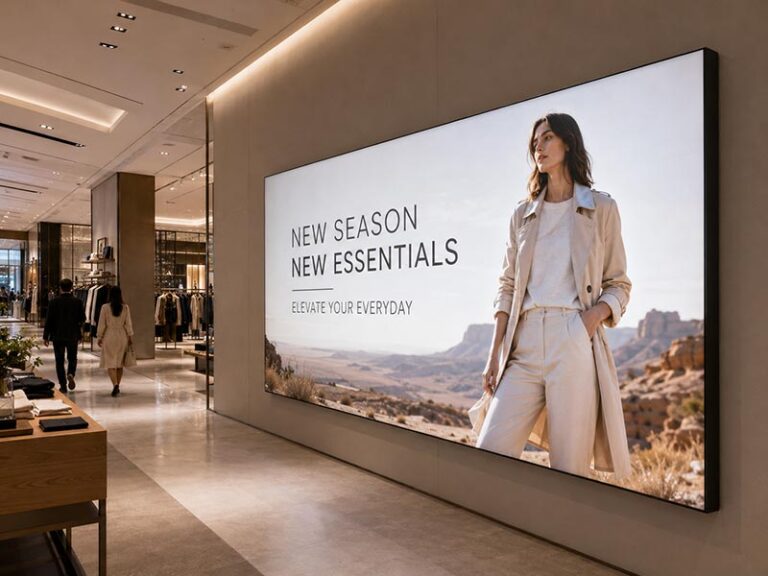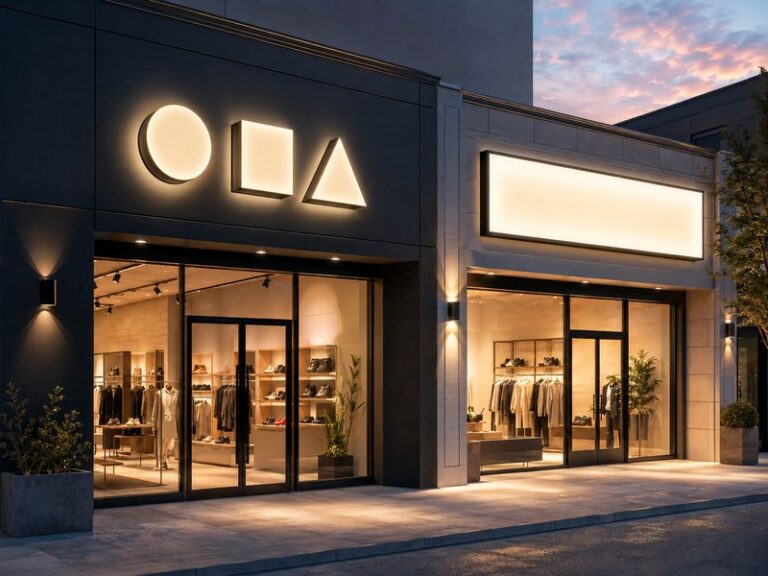

A flex face and a rigid face light box can look surprisingly similar from across a street, yet the two systems behave very differently once the sign becomes large, moves outdoors, needs to travel long distances, or requires regular graphic changes. The face is not simply the printed front of the sign. Its material affects cabinet construction, weight, illumination, visible joints, servicing, wind response, packaging, lifting, installation and the amount of work required when the graphic eventually needs to be replaced.
Flex face light boxes are generally more practical for large, continuous illuminated graphics where lower face weight, fewer visible panel joints and easier large-format handling are important. Rigid acrylic or polycarbonate faces are often a better fit for small and medium cabinets where a naturally flat surface, familiar panel construction and straightforward servicing matter. Final selection should consider size, location, lighting, graphics, maintenance and installation together.
A useful way to look at the choice is to imagine the sign five years after installation rather than only on the day it leaves the factory. Can a technician reach the LEDs? Can the graphic be changed without replacing the whole cabinet? Will an oversized panel fit into the installation area? Can rain drain out of the structure? Will the face still look smooth when illuminated at night? Once these questions are included, choosing between flex face and rigid face becomes a practical engineering decision rather than a simple material preference.
What Is the Difference Between Flex Face and Rigid Face Light Boxes?

A flex face light box uses a tensioned flexible translucent surface, while a rigid face light box uses a solid acrylic, polycarbonate or similar panel. This difference changes how the face is supported, transported, illuminated, replaced and exposed to environmental loads. Rigid faces rely on panel stiffness and retention, while flex faces rely on controlled perimeter tension and a frame strong enough to hold it consistently.
What Is a Flex Face Light Box?
A flex face light box uses a translucent flexible graphic stretched across the front of an illuminated cabinet. The material itself does not remain flat in the same way as acrylic or polycarbonate. Instead, the finished appearance depends on a tensioning system that pulls the graphic evenly around the perimeter. Depending on the cabinet design, this can involve tension bars, retaining tracks, clips or other mechanical systems built into the frame.
The practical advantage becomes clearer as the sign grows. A flexible face can normally be packed separately from the main cabinet, and it does not require the same kind of rigid protection as a large acrylic panel. This can make a significant difference when a sign must travel through factory doors, freight terminals, building access routes, lifts, scaffolding or high-level installation areas. The face can also provide one continuous illuminated graphic over an area where several rigid panels might otherwise be required.
Correct tension is essential. Too little tension can leave waves or wrinkles across the illuminated surface, while uneven tension may distort artwork or make straight lines look irregular. The frame also needs enough stiffness to resist the load created by the tensioned membrane. For that reason, a flex face is not simply a flexible sheet attached to an ordinary light box. The face, retaining system and cabinet structure have to be designed as one system.
Indoor fabric light boxes should also be separated from exterior flex face systems. iduoduo’s technical documentation lists fabric systems for shopping centres, exhibitions, indoor advertising, large graphics and replaceable images, but states that they should not automatically be treated as long-term outdoor light boxes unless the frame, graphic and weather-protection structure are specifically engineered for exterior use.
What Is a Rigid Face Light Box?
A rigid face light box uses a solid translucent panel installed into the cabinet with channels, trim, screws, removable retainers, hinges or another mechanical fixing system. Acrylic remains one of the most familiar choices because it provides a firm illuminated surface, can be cut accurately and supports several graphic methods, including coloured acrylic, UV printing, translucent films and layered designs.
Polycarbonate provides another option, particularly where additional impact resistance is useful. It can be considered for larger panels, elevated installations or locations where a more impact-resistant face is desirable. That does not make polycarbonate a universal replacement for acrylic. Its thickness, thermal movement, surface finish, light transmission, print method and fixing system still need to match the project. iduoduo’s technical material specifically identifies PC panels for larger faces, elevated installation and some impact-sensitive outdoor conditions.
Rigid faces are especially convenient when the panel remains manageable throughout manufacturing and installation. A compact restaurant sign, wall-mounted retail light box, menu cabinet or reception logo may not gain anything from a more complex tensioned face system. A removable rigid panel can provide a flat finish and direct access to the inside of the cabinet without making the overall sign unnecessarily complicated.
The challenge increases as the face grows. A large rigid panel becomes heavier, harder to protect, more difficult to lift and increasingly sensitive to transportation constraints. Where several panels are required, their joints also become part of the visual design and may become more noticeable once the sign is illuminated.
How Do Their Structures Differ?
The main engineering difference is the way forces are transferred into the cabinet. A rigid panel carries its own weight and transfers wind or handling loads through the retainers into the frame. A flex face places continuous tension around the perimeter and can move under wind pressure, so the cabinet has to resist that tension while keeping the visible surface smooth.
Neither face operates independently. A complete illuminated light box includes the structural cabinet, frame, face, graphic, LED system, power supply, wiring, optical distance, service access, mounting hardware and, where applicable, sealing and drainage. iduoduo treats these as one connected system because changing one element can affect several others.
A deeper cabinet may allow LEDs to blend more easily before the light reaches the face, while a shallow design can require denser or more specialised optical components. A heavier rigid panel can require stronger retention, while a large flex face requires stable perimeter tension and a frame that will not distort under load. Service access must also be planned around the face system because technicians may eventually need to replace LEDs, power supplies or graphics without dismantling the entire sign.
| Comparison Point | Flex Face Light Box | Rigid Face Light Box |
| Typical face | Tensioned translucent flexible material | Acrylic or polycarbonate panel |
| Face support | Perimeter tension | Panel stiffness and retainers |
| Large continuous graphics | Strong advantage | May require multiple panels |
| Face weight | Relatively low at large sizes | Increases with area and thickness |
| Surface flatness | Depends on tension | Naturally rigid |
| Graphic replacement | Flexible face can be replaced | Panel, film or printed face is replaced |
| Main structural issue | Tension, wind movement, frame stiffness | Weight, thermal movement, retention |
| Common applications | Large fascias, pylons, large advertising cabinets | Storefronts, menu boxes, smaller cabinet signs |
The practical difference is therefore much broader than soft material versus hard material. The face system affects the cabinet from artwork approval through installation and future servicing.
Which Light Box Is Better for Different Sizes?

Rigid face systems are usually straightforward for small and medium cabinets where a solid panel remains easy to manufacture, pack, carry and install. Flex face becomes increasingly useful as dimensions increase because the illuminated graphic can remain continuous without depending on a single oversized rigid sheet. Very large light boxes may still require cabinet segmentation, reinforcement, multiple electrical circuits and site assembly regardless of face type.
When Does Flex Face Make More Sense?
Flex face becomes more attractive when the sign reaches a scale where handling the face becomes a major part of the project. A rigid panel may be perfectly manageable at one size and surprisingly difficult only a little larger because both physical dimensions and weight increase. Manufacturing the panel is only the beginning. It must still survive packing, loading, international freight, unloading, transportation to the site and the final lift into position.
Large rigid sheets also need substantial protection. Acrylic can be scratched or cracked, while polycarbonate still needs protection against surface damage and deformation. The shipping crate may end up being designed around the face instead of around the structural cabinet. In some projects, the cabinet could be divided into transportable sections, yet the rigid panel prevents that advantage because the face still has to move as one oversized item.
A flex face separates these two problems. The cabinet can be divided where necessary for transportation while the graphic is packed separately and installed after the structure is assembled. This does not eliminate work on site, because tensioning a large face still requires care, access and sufficient working space, but it can remove the need to lift a very large brittle panel into position.
The continuous visual surface is another advantage. Where several rigid panels would otherwise be necessary, joints have to be positioned and supported. If a joint passes through a major logo, large letter or strong colour transition, it can become visible during daytime and even more obvious when illuminated. Flex face can often maintain a cleaner continuous graphic across the same area.
When Is Rigid Face More Practical?
Rigid face is often more practical when the light box stays within dimensions that are comfortable for normal sheet handling. A small or medium cabinet can frequently use one acrylic or polycarbonate panel, which keeps the overall construction simple and makes servicing familiar to local sign installers.
There is little benefit in introducing a tensioning system when a rigid panel already solves the project cleanly. A wall-mounted restaurant sign, compact menu cabinet, interior brand panel or standard storefront box may be easier to manufacture and maintain with a removable rigid face. The panel itself can also contribute to the design through coloured acrylic, applied translucent film, direct printing or layered decorative construction.
Shape matters as much as width. A narrow but extremely tall rigid panel may be difficult to handle even when its total area is not particularly large. Circular signs, logo-shaped cabinets and unusual outlines can also change the calculation because the panel requires different support and retention. Installation height, door openings, lift dimensions and access around the finished mounting position can matter more than a single width measurement.
Polycarbonate can also extend the practical range of rigid faces where impact resistance is important, but the material should still be evaluated for expansion, printing, optical performance and surface behaviour. The correct decision is therefore based on the complete handling and installation path, not on a single maximum dimension.
Do Large Light Boxes Need Segmentation?
Large light boxes often need to be divided into several structural sections even when the finished sign is intended to appear as one continuous unit. Manufacturing equipment, truck dimensions, export crates, containers, lifts, building entrances and façade access can all limit the maximum practical shipping size. A cabinet that can technically be fabricated in one piece is not necessarily the cabinet that should be shipped in one piece.
iduoduo’s large-light-box engineering guidelines identify internal square-tube reinforcement, multiple cabinet sections, multiple panels where required, several electrical circuits, lifting points, service doors, transport frames and on-site assembly as possible requirements. The same documentation states that an oversized light box should not simply use the construction of a small box scaled upward.
When segmentation is required, the location of each joint should be planned before production begins. Structural connections have to align accurately, LED layouts need to continue across sections, electrical circuits must remain serviceable, and waterproofing has to continue through the finished assembly. Graphic joints should also avoid important text and logo areas wherever possible.
Flex face can be particularly useful here because cabinet segmentation does not always require segmentation of the visible graphic. Several cabinet sections can sometimes be assembled on site and then covered with one continuous tensioned face. With a rigid face, the panel system may introduce additional visible joints that have to be considered separately.
| Project Scale | Rigid Face Consideration | Flex Face Consideration |
| Small wall cabinet | Usually simple and practical | Often unnecessary |
| Medium storefront box | Commonly effective | Useful where graphics change often |
| Wide retail fascia | Panel size and joints become important | Continuous face becomes attractive |
| Large pylon cabinet | Weight and lifting require attention | Lower face weight can simplify handling |
| Oversized building sign | Multiple panels may be required | Cabinet can often be segmented behind one graphic |
There is no single dimension at which every rigid face suddenly becomes unsuitable. The useful threshold is the point where the panel begins creating more problems in logistics, joints, lifting or servicing than the tensioned system creates in installation.
How Do They Compare in Lighting and Appearance?

Both flex face and rigid face light boxes can produce smooth, professional illumination when LED spacing, cabinet depth, beam angle, face transmission, graphic density and internal reflection are designed together. Neither material guarantees better light by itself. Most visible hotspots, dark edges and uneven areas result from the relationship between the face and the optical system rather than from the face category alone.
Which Gives More Even Illumination?
A rigid panel can look perfectly uniform when the correct acrylic or polycarbonate transmission is matched with sufficient LED-to-face distance. A flex face can produce equally smooth illumination when the material, print density and LED layout have been designed for each other. Problems normally appear when one component is changed without checking the rest of the system.
Seven factors have a particularly strong influence on light uniformity: cabinet depth, LED spacing, LED beam angle, face transmission, internal reflection, single- or double-sided construction and graphic colour. These are all included in iduoduo’s light-box optical engineering reference.
LED spacing that is too wide can create visible dark areas between modules. Positioning LEDs too close to the face may produce individual bright points. Dark printed areas absorb more light than pale areas, so the same LED layout can appear different across one graphic. Internal frame members can also create shadows if their position is not coordinated with the lighting system.
Increasing LED quantity alone is not always the correct answer. It can raise power consumption, heat generation and component cost while leaving the original optical problem unresolved. A better correction may involve wider-angle modules, modified LED spacing, additional optical depth, different diffusion material or improved internal reflection.
For this reason, a complete illuminated inspection is more useful than checking the cabinet only in daylight. iduoduo’s recorded light-box QC checks overall brightness, dark areas, hotspots, edges, colour temperature, graphic colour, LEDs, power supplies and wiring before shipment.
How Does Cabinet Depth Affect Light?
Cabinet depth gives light the physical distance required to spread before reaching the visible face. In a conventional backlit light box, a deeper cabinet usually gives individual LED beams more room to overlap, which can make uniform illumination easier to achieve. A shallower cabinet reduces this mixing distance and therefore places more pressure on LED density, optical lenses and diffusion materials.
iduoduo’s engineering documentation gives approximately 60–200 mm as a common light-box depth range, while clearly stating that the final depth should be determined by sign dimensions, LED type, optical diffusion, single- or double-sided construction, face material, frame, servicing, power supply and mounting system.
This means a 60 mm cabinet should not simply copy the LED layout from a 150 mm cabinet. Thin illuminated boxes may require wider beam angles, denser LED placement, specialised modules, edge-lighting or carefully selected diffusion layers. A deeper cabinet can simplify the optical problem but increases projection from the wall, material use, freight volume and sometimes structural load.
Double-sided boxes require separate calculation because light has to reach two faces. Internal supports can create shadows, and the distance between both faces changes how the LED system should be positioned. iduoduo therefore treats double-sided illumination as a separate optical configuration involving central LED placement, reflection, cabinet depth, face transmission and the control of brightness differences between the two sides.
How Do Day and Night Appearance Differ?
An illuminated graphic has two visual states that should be evaluated separately. During the day, the viewer sees the printed ink, film, acrylic colour and surface finish under ambient light. At night, light passes through those materials from behind, changing the apparent saturation and brightness of the same colours. A screen proof cannot completely predict this behaviour because a computer display and a backlit printed surface create colour in different ways.
Rigid face systems may use opal acrylic, coloured acrylic, clear acrylic with applied translucent film or direct UV printing. Flex face graphics are normally printed onto the flexible translucent surface itself. In both cases, ink density and the colour of the LED source influence the illuminated result. Dark graphics can reduce transmission considerably, while large white areas may appear much brighter unless the print and optical design compensate for the difference.
iduoduo’s light-box production guidance requires checks covering file resolution, colour mode, white ink where applicable, transmission, illuminated colour, surface protection and outdoor durability. It also states that ordinary screen colour cannot fully represent the colour that appears after light passes through the finished face.
For brand-sensitive programmes, it is useful to approve both the unlit and illuminated result. A physical colour sample, agreed LED colour temperature, daytime photograph and nighttime photograph provide a more reliable reference than a digital rendering alone, especially when the same brand will later be reproduced across multiple stores.
What Visual Defects Should Be Checked?
Different face systems tend to reveal different faults. Flex faces can show wrinkles, loose areas, uneven tension, fold marks or slight graphic distortion if production and installation are not controlled carefully. Rigid faces can show scratches, cracking, panel movement, poorly positioned joints or inadequate clearance for thermal expansion. Both systems can suffer from lighting defects such as LED dots, dark bands, dim corners or structural shadows.
Quality inspection should therefore cover the visible face and the cabinet behind it. Useful checks include graphic size, orientation, logo position, colour, surface condition, seams, light transmission and face security. The cabinet should be checked for overall dimensions, diagonal measurements, flatness, welding, reinforcement, service openings, mounting points and deformation.
iduoduo separates frame inspection, face and graphic inspection, and illumination inspection in its documented production process. Graphic checks cover dimensions, logos, text, colour, printing, bubbles, scratches, seams, transmission and correct orientation. Lighting checks include full-face brightness, dark areas, hotspots, edge performance, colour temperature and consistency between two faces where relevant.
A good light box should therefore be judged both switched off and switched on. A cabinet can look perfectly clean during daytime inspection and still reveal serious optical problems the moment the LEDs are activated.
Which Is Better for Outdoor Use?

Both face systems can be used outdoors when the cabinet is engineered for the actual environment. Flex face is widely suited to large exterior illuminated graphics, while acrylic and polycarbonate remain practical for many smaller outdoor cabinets. Long-term performance depends on wind, face retention, temperature movement, frame strength, drainage, sealing, electrical protection and mounting rather than on whether the visible face is flexible or rigid.
How Does Wind Affect Each Face?
Wind loads the two systems in different ways. A rigid panel resists movement and transfers pressure through its surface into the retaining system and cabinet. A flex face can deflect more under changing wind pressure, which makes perimeter tension, frame stiffness and mounting particularly important. A lightweight face should therefore not be confused with a sign that carries no meaningful wind load.
Large surfaces need careful consideration because wind acts over the full exposed area. A large tensioned graphic can behave much like a sail, while an oversized rigid panel transfers its load through a comparatively stiff surface. Both approaches eventually deliver those forces into the structural frame, brackets, anchors and building connection.
Rigid faces also need allowance for temperature movement. Acrylic and polycarbonate expand and contract as temperature changes, so the panel should not be fixed so tightly that normal movement causes bowing, cracking or excessive stress around the retainers. Larger areas make these effects more important because the total dimensional change becomes greater.
Installation height further changes the practical risk. Replacing a panel at ground level is very different from handling the same panel on a high façade. In larger cabinet and projecting-sign projects, iduoduo can provide product dimensions, weights, bracket details, materials and manufacturing drawings, while final wind-load calculations, anchors, wall loading and local structural approval remain responsibilities for qualified project professionals at the installation location.
How Should Water Be Managed?
Outdoor light boxes need a combination of sealing and drainage. Attempting to solve the whole weather problem by applying sealant around every visible joint can create a false sense of security. Sealants age, panels move, cabinets are opened for maintenance, and condensation can appear inside a sign even when there is no obvious rainwater leak.
Water can reach the cabinet through frame joints, face edges, screws, cable exits, service covers and bracket interfaces. These points should be considered during engineering rather than patched after installation. iduoduo’s exterior light-box guidance specifically identifies frame joints, panel edges, screw holes, wire exits, service covers, bracket connections, power areas and drainage as areas that need coordinated treatment. The same guidance states that long-term outdoor performance should not depend entirely on external adhesive joints.
Drainage then provides a controlled path for moisture to leave the cabinet. The sign’s bottom structure, wire exits, mounting angle, condensation, service covers and normal rain direction all affect where drainage should be positioned. A drainage hole is useful only if it remains open after the sign is mounted, so local sealing work should not accidentally block the intended exit path.
These principles apply to both flex face and rigid face systems. The visible material may change, but LEDs, power supplies, wiring, brackets and cabinet joints still require the same disciplined approach to outdoor protection.
What Outdoor Protection Level Is Needed?
An IP rating is useful only when it reflects the complete electrical and structural system. Installing one waterproof LED module inside a poorly protected cabinet does not make the finished sign equally protected. Connectors, power supplies, wire exits, access covers, frame joints and drainage all influence the real performance of the product.
iduoduo’s documented outdoor configurations use IP65 as a common option for outdoor Light Boxes and Blade Signs, IP67 for projects exposed to heavier rain or higher humidity, and IP68 as an available project-specific option. The documentation also states that the required level should be matched across LEDs, power supplies, connectors, cabinet construction, wire exits, brackets and service structures.
| Outdoor Condition | Practical Engineering Question |
| Normal rain | Are face edges, cable exits and service covers protected? |
| High humidity | Are connectors and power supplies appropriately protected? |
| Strong wind | Are face, frame, brackets and anchors engineered together? |
| Direct sun | Are face and printed materials suitable for UV exposure? |
| Temperature change | Is adequate material movement allowed? |
| Elevated installation | Can the face and electrical components be serviced safely? |
| Coastal environment | Is additional corrosion protection required? |
| Routine cleaning | Can the surface tolerate regular maintenance? |
The highest available rating is not automatically necessary for every project. A clear description of the actual environment normally leads to a more sensible specification than applying the same outdoor standard to every sign.
Do Outdoor Cabinets Need More Structure?
Exterior cabinets often require more structural control because they have to handle wind, long-term vibration, thermal movement, lifting and mounting loads in addition to their own weight. Large signs may also need to withstand stress during transportation before they are ever installed.
Aluminium is widely used because it provides useful stiffness at relatively low weight and is well suited to outdoor fabrication and finishing. iduoduo’s documented light-box structures can also use aluminium sheet, stainless steel, galvanised steel or combined metal construction. Steel and stainless steel can be useful where higher rigidity, particular finishes or specific mounting requirements justify the additional weight.
More material is not automatically better engineering. An unnecessarily heavy cabinet increases freight cost, building load and installation difficulty. Structural reinforcement is more effective when it is concentrated around long unsupported spans, corners, bracket connections, lifting points and other areas where forces actually travel.
The face system also changes how the frame should be reinforced. Flex face creates continuous perimeter tension, while a rigid panel applies its own weight and loads through the retainers. Outdoor cabinet design should therefore begin with the entire load path from face to frame, frame to bracket and bracket to the building rather than selecting material thickness in isolation.
How Do Installation, Maintenance, and Cost Compare?

Flex face often makes very large illuminated surfaces easier to transport and handle, while rigid face systems can offer simple panel access on compact cabinets. Neither system is automatically cheaper over its full working life. Real project cost includes fabrication, face production, packaging, freight, lifting, installation, graphic replacement, service access, LEDs, power supplies and eventual maintenance rather than only the initial face material price.
Which Is Easier to Ship and Install?
Large rigid panels create logistics challenges long before they reach the installation site. The panel needs protection from scratches, edge damage, bending and impact, often requiring a crate that is considerably larger than the visible graphic itself. Once packed dimensions increase, the choice of courier, air freight, sea freight or specialised oversized transport can change as well.
Flex face can normally be packed separately from the main cabinet, making it easier to divide the structural frame into manageable sections while preserving a continuous graphic. This can reduce the amount of rigid protection required around the face and can simplify handling when installation occurs above ground or in areas with restricted access.
Installation still requires skill. A large flexible face needs enough working space for technicians to position and tension it correctly. If tension is uneven, wrinkles or graphic distortion may remain visible after illumination. A rigid panel avoids the tensioning operation but may require additional lifting equipment because a large sheet is harder to control in wind and more vulnerable to handling damage.
iduoduo’s logistics approach uses courier services mainly for smaller samples and compact light boxes, air freight for urgent projects and sea freight for larger or batch light-box orders. Extra-long, extra-wide and wooden-crated products require logistics limitations to be checked in advance.
Thinking about transport before finalising the cabinet can prevent a common problem: manufacturing a sign that is easy to build but unnecessarily difficult to deliver.
How Are Graphics Replaced?
Graphic replacement often determines which face system creates the lower long-term operating cost. A restaurant menu, shopping-centre campaign, seasonal retail graphic or promotional message may change several times even though the cabinet and LEDs remain in good condition.
A flex face naturally separates the printed graphic from the cabinet. Once the perimeter retention system is opened, the old surface can be removed and a replacement graphic tensioned into the same frame. For organisations that update campaigns regularly, this can prevent the cabinet itself from becoming disposable every time the visual content changes.
Rigid face light boxes can also be made easy to update. A removable acrylic panel may carry replaceable translucent film, or the cabinet may use hinged frames, magnetic retainers, removable panels or other access systems. The most important point is to decide how often the graphic is expected to change before the cabinet is manufactured.
iduoduo’s documented options include removable panels, fabric graphics, replaceable translucent film, retaining slots, hinged frames, magnetic frames and opening cabinet structures. The same engineering guidance states that the graphic replacement method should be confirmed before quotation.
This early decision can save considerable labour later. A simple graphic update should not require dismantling a large sign simply because the original cabinet was designed only around the first artwork.
How Should Service Access Be Designed?
Light boxes contain components that may eventually require maintenance even when the cabinet itself remains structurally sound. LEDs, power supplies, connectors and wiring should therefore be positioned so technicians can reach them without destroying the face or removing unrelated parts.
Common access methods include removable front panels, hinged faces, screw-fixed covers, rear service doors, side openings and dedicated power-supply compartments. The correct method depends on the mounting location. A cabinet installed directly against a solid wall may not have useful rear access, while a large pylon or façade sign may benefit from service doors that allow technicians to work from behind the visible face.
iduoduo’s light-box engineering documentation warns that a large cabinet without planned access becomes considerably harder to repair. Its documented options include removable panels, hinged doors, screw-fixed covers, rear openings, side access, removable graphics and replaceable power supplies.
Power-supply location is particularly important. The unit needs ventilation, protection against standing water and enough clearance so that it does not press against the graphic or interfere with LED output.
A small design decision at production stage can therefore determine whether a future electrical replacement takes a few minutes or requires expensive access equipment and partial cabinet disassembly.
What Drives Total Project Cost?
The price of the face material is only one part of the finished light box. Two signs with identical visible dimensions may have very different costs because one is single sided and wall mounted while the other is double sided, exposed to weather, mounted high above ground and designed for frequent graphic changes.
Important cost variables include sign size, cabinet depth, frame material, face material, printed graphics, LED layout, power supplies, special shapes, mounting brackets, weather protection, service structure, quantity, packaging, transport and urgent production requirements. These factors are all part of iduoduo’s documented light-box costing framework.
A rigid face can be highly economical on a compact cabinet because the panel, frame and shipment remain simple. The same approach applied to a very large fascia may require several panels, stronger support, larger crates and additional lifting equipment. In that situation, flex face may reduce overall project cost even when its tensioning hardware is more specialised.
Good cost control therefore comes from eliminating unnecessary complexity rather than weakening important performance. Standard shapes, sensible dimensions, optimised cabinet depth, suitable face selection, repeated graphic formats, batch production, practical segmentation and consolidated shipping can all reduce cost. Structural strength, electrical safety, necessary LED performance, drainage and packaging protection should not be removed simply to create a lower initial quotation.
Which Light Box Should You Choose for Your Project?

Choose rigid face when a solid panel remains easy to manufacture, transport, install and remove for servicing. Choose flex face when dimensions become large, one continuous graphic is important, rigid face handling becomes difficult or a lighter replaceable surface improves installation. The final specification should also account for cabinet depth, illumination, outdoor exposure, graphic changes, mounting, service access, packaging and transportation.
Which Fits Common Commercial Applications?
A conventional storefront light box is often a natural starting point for rigid acrylic or polycarbonate. The dimensions are usually manageable, the panel provides a firm visible surface, and standard retainers can make internal access straightforward. Restaurants, local retailers, offices, clinics and smaller commercial premises can often use this construction without creating unnecessary engineering complexity.
The balance changes for wide retail fascias and large architectural cabinets. As the illuminated surface becomes wider, a single rigid face becomes harder to protect, transport and lift, while several rigid panels introduce visible joints. Flex face should therefore be considered much earlier for these applications because one tensioned graphic can often cover a large illuminated field while keeping the visible face comparatively light.
Pylon and freestanding cabinets require a broader assessment. Face type is only one decision among installation height, two-sided visibility, internal reinforcement, wind exposure, electrical access and future servicing. A project that is easy to inspect at ground level can become expensive to maintain once mounted several metres above a car park or roadside.
A practical starting point is:
- Compact wall-mounted cabinet: evaluate rigid face first.
- Medium storefront cabinet: compare both systems.
- Large continuous fascia: evaluate flex face early.
- Elevated pylon cabinet: compare face weight, wind and maintenance.
- Frequently updated advertising: prioritise graphic replacement.
- Impact-sensitive installation: include polycarbonate in the evaluation.
These are useful project filters rather than fixed industry limits. Site access, available materials and installation conditions can move the decision in either direction.
What Details Are Needed Before Selection?
A logo and one overall dimension are rarely enough to define a commercial light box correctly. The same artwork used in an indoor shopping centre, roadside retail park and exposed exterior façade may require different face materials, frame structures, electrical components, waterproofing and mounting arrangements.
A complete technical enquiry should provide the manufacturer with enough information to understand the sign as a project rather than simply as an image. iduoduo’s documented Light Box and Cabinet Sign quotation process uses 20 core inputs:
- Product type
- Single- or double-sided construction
- Overall dimensions
- Shape
- Quantity
- Logo or graphic artwork
- Face material
- Frame colour
- Indoor or outdoor location
- Light colour
- Voltage
- Power-supply requirements
- Bracket requirements
- Installation wall or surface
- Cable exit position
- Waterproofing requirement
- Whether graphics need replacement
- Destination country
- Packaging requirements
- Required project date
These project inputs are documented in iduoduo’s Light Box engineering reference.
Providing this information early improves more than quotation accuracy. It also allows face type, cabinet depth, LED layout, service access and logistics to be evaluated before a drawing is approved. That reduces the risk of later discovering that a panel is too large to ship, the sign cannot be serviced from the available side, or the specified electrical configuration does not match the installation market.
How Should the Final Specification Be Evaluated?
The best specification is one that remains practical through every stage of the project. Artwork needs to reproduce correctly, the face needs to match the cabinet, the LED system needs enough optical distance, the power supply has to remain serviceable, outdoor structures need suitable drainage and the finished product must still fit the chosen shipping and installation method.
Inspection should therefore cover more than the visible print. iduoduo’s documented Light Box QC includes overall dimensions, diagonals, flatness, welding, reinforcement, face channels, service openings, brackets, mounting holes, graphic position, printing, colour, transmission, full-face brightness, dark areas, hotspots, colour temperature, LEDs, power supplies and wiring.
Illuminated Light Boxes, Cabinet Signs and Blade Signs also undergo a 72-hour pre-shipment test covering LED operation, power supplies, connectors, wiring, heat, controls and abnormal flicker. This testing does not guarantee that a sign can never require service, but it helps reveal early electrical and lighting issues before the product enters international transport.
For development projects, iduoduo supports an MOQ starting from 1 piece. The documented schedule is approximately 5–7 days for a normal sample or single unit, 7–15 days for special shapes, complex brackets or larger projects, 7–10 days for small batches, and 10–20 days for medium batches. Large projects are scheduled according to their dimensions, engineering work, production sequence, testing and delivery requirements.
A useful final decision does not declare flex face universally better than rigid face or rigid face universally more durable. It removes the largest risks from the actual project. A compact wall cabinet may benefit from the simplicity of acrylic or polycarbonate, while a long illuminated fascia may become considerably easier to transport and install with a tensioned face. An outdoor pylon may require an entirely different answer once wind, access, service doors and electrical maintenance are considered.
The important point is to evaluate the complete sign rather than the face in isolation. Frame, face, LED layout, cabinet depth, power, environment, mounting, maintenance, packaging and transport all influence the final result. When those factors are confirmed together before manufacturing begins, the choice between flex face and rigid face normally becomes much clearer, and the finished light box is more likely to remain practical long after the first installation is complete.
Frequently Asked Questions
What is the main difference between flex face and rigid face light boxes?
The main difference is how the illuminated face is constructed and supported. A flex face uses a flexible translucent graphic held under controlled tension around the cabinet perimeter, while a rigid face uses a solid acrylic, polycarbonate or similar panel held by retainers. That difference affects weight, large-format capability, visible joints, wind behaviour, graphic replacement, packaging, installation and maintenance. Neither construction is universally superior; the right choice depends on the scale and operating conditions of the sign.
Which light box is better for very large signs?
Flex face is often the more practical option for very large illuminated graphics because it can reduce face weight and avoid some of the visible joints associated with multiple rigid panels. The cabinet may still require segmentation, internal reinforcement, lifting points, several electrical circuits and on-site assembly. Large signs should therefore be evaluated as structural and logistics projects rather than assuming that choosing a flexible face alone solves every large-format challenge.
Are rigid acrylic light boxes suitable for outdoor use?
Yes. Acrylic and polycarbonate light boxes can be used outdoors when their panel thickness, retention, frame, electrical components, sealing, drainage and mounting system are designed for exterior exposure. Polycarbonate may be considered where higher impact resistance is useful. Outdoor suitability should not be judged from the face material alone because water commonly enters through cabinet joints, service covers, cable exits and mounting connections rather than directly through the face itself.
Can a flex face light box be used outdoors?
Yes, provided it is an exterior-grade flex face system rather than an ordinary indoor fabric display. The face material, tensioning hardware, frame strength, wind behaviour, graphic printing, electrical protection and drainage all need to be suitable for outdoor service. Large exterior flex face cabinets are common because the system supports continuous graphics at substantial sizes, but wind exposure and the final structural connection to the building still require proper engineering.
Which system makes graphic replacement easier?
Flex face is often convenient when large graphics need regular replacement because the printed face can be removed separately while the aluminium or metal cabinet remains installed. Rigid light boxes can also support convenient updates through removable acrylic panels, replaceable translucent films, hinged frames or magnetic structures. The most important step is to decide how frequently the graphic will change before the cabinet is quoted and manufactured so the correct access system can be built in from the beginning.
How deep should an LED light box be?
There is no single correct depth for every light box. iduoduo’s documented common engineering range is approximately 60–200 mm, but the final depth depends on dimensions, LED type, face transmission, required diffusion, single- or double-sided construction, frame structure, power-supply location and service access. Shallow cabinets often require more specialised optics or denser LED layouts, while deeper cabinets provide more mixing distance but increase material use and shipping volume.
What information is needed to quote a custom flex face or rigid face light box?
A useful quotation normally requires more than artwork and width. Provide the sign type, dimensions, shape, quantity, single- or double-sided construction, logo or graphic, preferred face, indoor or outdoor location, frame colour, lighting colour, voltage, power requirements, mounting surface, brackets, cable exit, weather-protection requirement, graphic replacement needs, destination country, packaging needs and target project date. Clear project information allows the face, cabinet, optics, electrical system and logistics to be evaluated together instead of producing an inaccurate price based only on appearance.